
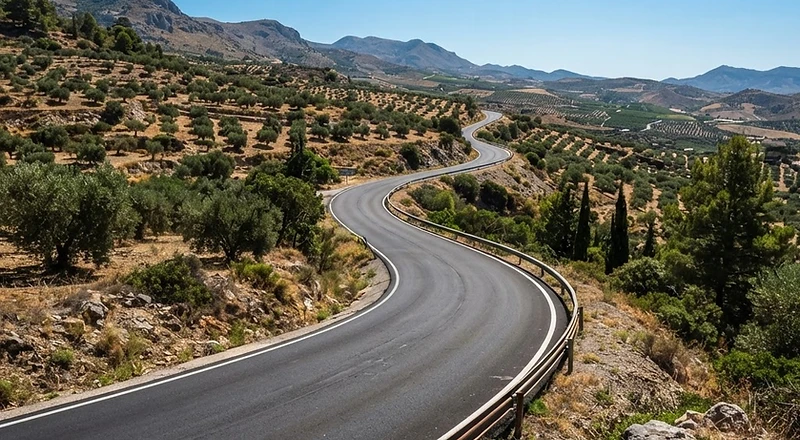
Andalucía Invests €17.5m in Upgrading Málaga Secondary Roads
Regional authorities confirm a €17.5 million repaving programme targeting vital interior roads connecting coastal hubs to mountain villages.
Convoys of resurfacing crews will soon be a familiar sight on the roads linking Málaga's coast to its interior, after the regional government confirmed a €17.5 million road investment package aimed squarely at the secondary arteries that carry the bulk of everyday traffic across the province. Unlike headline-grabbing motorway projects, this money is earmarked for the unglamorous but essential network of feeder roads and connecting lanes that residents, commuters and tourists use daily without necessarily thinking about who maintains them.
Reinforcing Coastal and Interior Corridors
The programme concentrates on autonomic routes that stitch the coastal strip together with villages further inland, particularly those serving the Guadalhorce Valley and Axarquía districts. These are not glamorous tourist routes but working roads: agricultural traffic, delivery lorries and daily commuter cars share the same tarmac, and years of heavy use combined with relentless summer heat have taken their toll. Ruts, cracking and structural degradation have become common complaints from local transport associations, who have pushed for action for some time.
The Serranía de Ronda and the Antequera basin will also see comprehensive resurfacing work under the same package. Regional engineers point out that interior roads face a different kind of punishment than coastal ones. Sharp swings between hot days and cold nights cause asphalt to expand and contract repeatedly, opening up cracks far faster than happens along the milder shoreline. Add heavy agricultural vehicles moving olives, citrus fruit and other produce along these routes, and the surface fatigue accelerates considerably. For residents of towns such as Ronda or Antequera, the difference between a well-maintained road and a neglected one can mean longer journey times, higher vehicle maintenance costs and, in the worst cases, genuine safety concerns.
Relieving Pressure on Commuter Towns
The timing of this investment is no coincidence. Housing costs along the coast and in central Málaga have pushed a growing number of workers to settle in hinterland towns, from where they commute daily back into the city or the coastal employment hubs. That shift has changed traffic patterns considerably through 2026, with regional connectors that were never designed for this volume of daily use now under sustained pressure.
For the expat community and long-term foreign residents who have chosen inland towns precisely for their lower costs and quieter pace of life, road quality is not an abstract issue. Many rely on these secondary routes to reach schools, hospitals and workplaces on the coast, and a badly rutted road adds real time and expense to a daily routine. Homeowners considering property away from the immediate coastline will also be watching this investment closely, since infrastructure quality often factors into resale value and long-term desirability, something specialists such as Marbella New Homes regularly flag to buyers weighing coastal versus inland options.
Regional highways officials have confirmed that lane closures during the works will be scheduled largely outside the morning and evening rush periods, a practical concession aimed at minimising disruption for residents and the local businesses that depend on smooth inter-town transport links. This approach mirrors how similar resurfacing campaigns have been handled elsewhere in Andalucía, where authorities have learned that badly timed closures can cause disproportionate economic damage to small businesses along affected routes.
What Happens Next
No detailed works calendar has been published alongside the funding announcement, but the emphasis on rolling, off-peak closures suggests a phased rollout rather than simultaneous works across every affected corridor. That should come as some relief to residents bracing for months of orange cones and diversions all at once.
For now, the €17.5 million package represents an acknowledgement from the regional administration that the province's secondary road network, long overshadowed by investment in major motorways and coastal infrastructure, needs sustained attention. Whether the funding proves sufficient to address the full scale of wear across the Guadalhorce Valley, Axarquía, Serranía de Ronda and Antequera basin routes remains to be seen once contractors begin detailed surveys and the actual scope of resurfacing becomes clear on the ground.
Related news


Hollywood Stars Gather in Málaga as Major Comic Showcase Continues
Anthony Mackie, David Harbour and Winston Duke have touched down on the Costa del Sol for major international film panels and fan events.

Málaga Airport Commences New Terminal Infrastructure Works
Construction crews initiate extensive foundational infrastructure upgrades across Málaga-Costa del Sol Airport ahead of peak winter schedules.


Hollywood Stars Touch Down in Málaga for Global Pop Culture Convention
Marvel stars Anthony Mackie, David Harbour and Winston Duke draw international crowds to Málaga for a blockbuster autumn entertainment showcase.