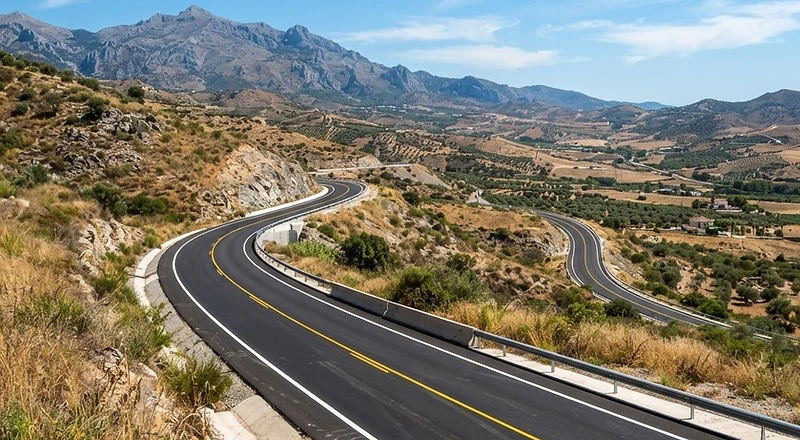
Andalucía Starts Final Phase of €17.5m Road Repaving Project
A targeted provincial resurfacing scheme enters its final stretch across critical feeder routes between the coast and the interior.
Diggers and asphalt crews have moved onto some of Málaga province's busiest inland routes this week, marking the start of the final push in a €17.5 million highway resurfacing programme. Contractors working for the regional administration are racing to repair worn asphalt across several key corridors before the autumn rains set in, a deadline that has shaped the pace and scheduling of the entire operation.
A Race Against the Rain
The scheme was commissioned earlier this summer, when engineers flagged sections of road surface that had degraded to the point of posing a genuine skidding risk once wet weather returns. Anyone who has driven the Guadalhorce Valley roads after the first proper downpour of the season knows how quickly cracked, sun-baked tarmac can turn treacherous. Officials clearly want the worst stretches sorted before that happens again this year, which explains why machinery has arrived on several fronts simultaneously rather than one road at a time.
Why These Roads, Why Now
This is not routine municipal patching of potholes on residential streets. The €17.5 million allocation targets high-load autonomic highways — the arteries that connect the coastal strip to inland towns rather than local access roads. Crews are working through the Guadalhorce Valley and Axarquía, and pushing on to secondary routes climbing towards the Serranía de Ronda and the Antequera plains.
Those inland corridors have taken a battering. Traffic volumes have climbed sharply over the past couple of years as more foreign residents settle in hinterland towns and villages while continuing to commute down to jobs on the coast — a pattern that has reshaped daily traffic flow across much of the province. Add decades of heavy goods vehicles grinding along the same surfaces, plus summer temperatures that regularly soften asphalt during the day and let it contract hard overnight, and you get exactly the kind of rutting and cracking now being addressed. Engineers assessing the roads found sections where the surface had simply worn thin, leaving drivers with reduced grip and a bumpier, harder ride than the roads were designed to give.
Keeping Traffic Moving
Anyone who has sat through Spanish roadworks during a weekday rush hour will appreciate the approach being taken here. Rather than closing lanes during the day, traffic management teams are concentrating the heaviest work into off-peak night shifts on the busiest sections, when volumes drop and closures cause far less disruption.
Single-lane closures are being introduced section by section, with digital signal boards and clearly marked diversions guiding drivers around active work zones. The intention is to keep the main arteries passable during the morning commute, when coastal-bound traffic from inland towns is heaviest, and to concentrate disruption in the hours when fewer people are on the road.
What It Means for Residents and Commuters
For the thousands of people who live inland and work along the coast — a growing number of them expats who have chosen towns in the Guadalhorce Valley, Axarquía or around Ronda for a lower cost of living and a quieter pace of life — this project matters in a very practical way. Anyone travelling late in the evening or setting off early for a coastal job should build in an extra 15 minutes or so while works are active near their route, particularly where single-lane closures are in force.
Homeowners and prospective buyers weighing up inland properties against coastal flats will also want to factor this into their thinking. Better road surfaces on these commuter corridors should mean less wear on vehicles, fewer tyre and suspension repairs, and a smoother, safer drive during wet weather once the rains do arrive. Local haulage firms and delivery services using these same routes stand to benefit too, given how much daily wear heavy vehicles inflict on ageing tarmac.
Timeline and Next Steps
The entire repaving plan is scheduled to reach completion before the end of 2026, with the current phase representing the final and most intensive stretch of works. Motorists should expect rolling closures to shift from one section to another over the coming months rather than remaining fixed in one spot, so it is worth checking local traffic updates before setting off on unfamiliar routes through the affected zones. Once complete, the province's inland arteries should offer a noticeably smoother and safer surface for the daily flow of commuters, residents and visitors who rely on them.
Related news


Álora Celebrates Historic Culinary Legacy with Annual Perotas Soup Festivities
Álora marks the historic tradition of its agricultural harvest dish as culinary lovers gather in the Guadalhorce Valley for the iconic Perotas Soup Day.


Yunquera Fair Launches Autumn Festivities with Deep Mountain Cultural Traditions
Yunquera enters its autumn celebrations this week, drawing visitors into the dramatic Sierra de las Nieves with folk music, religious processions and mountain hospitality.


Costa del Sol Hospitality Leaders Contest Rigid Coastal Environmental Rules
Beach restaurant operators and chiringuito federations across the coast launch talks with authorities to modernise restrictive coastal concession regulations.