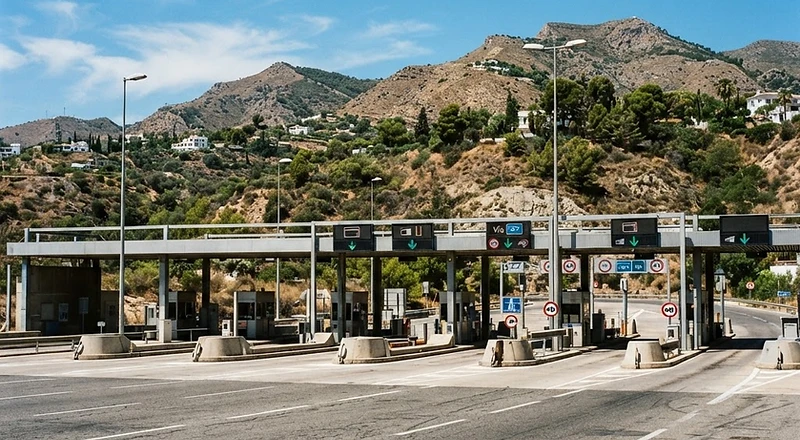
AP-7 Toll Rates Drop as Autumn Tariffs Bring Highway Relief
Motorists traversing the western Costa del Sol see toll charges fall by up to forty percent as winter price schedules take hold.
Lower Tolls Return to the AP-7
Motorists using the AP-7 motorway along the western Costa del Sol have started paying noticeably less to use the road, now that the summer surcharge period has ended. Under the terms that govern concessionaire Ausol, which operates this stretch of toll road between Guadiaro and Estepona before it continues towards Málaga, tariffs spike every year during a defined four-month peak season. That window closed at the end of September, and standard winter pricing is back in force for anyone driving between Fuengirola, Marbella and Sotogrande.
For the thousands of people who use this road daily — contractors heading to building sites, hospitality staff working split shifts, parents dropping children at international schools along the coast — the shift back to winter rates is a tangible change to monthly outgoings rather than a minor technicality. The AP-7 remains the fastest route through this part of the province, running largely free of the roundabouts, traffic lights and seafront congestion that slow the parallel A-7.
Toll Breakdown: Town by Town
The scale of the seasonal swing is considerable. Between June and September, charges across the main booths rose by roughly 63 percent compared with the rest of the year, a jump that has long frustrated regular users and prompted periodic complaints from local business groups.
At the Calahonda barrier, one of the busiest points on this stretch, a standard car now pays €5.70, down from the €9.20 charged throughout summer. Further along the coast at San Pedro Alcántara, the main plaza toll has dropped to €3.85 from a peak of €6.25, while the smaller San Pedro slip-road booth has fallen to €2.20 from €3.60 — a meaningful saving for anyone making that short hop several times a week.
At the western end, the Manilva toll has rolled back to €2.45 from €4.05, with its slip road now charging €1.20 instead of the €2.00 demanded during the high season. Taken together, these reductions mean a daily commuter making a return trip through just one of these barriers could be saving several euros per journey compared with August rates.
Why the Prices Move Every Year
The system is built into the concession agreement that governs how Ausol prices the road, with national transport regulations setting out when peak and off-peak periods apply. Broadly, the high-tariff window covers the busiest tourist months, when traffic volumes climb sharply with holidaymakers and second-home owners arriving along the coast, and a shorter, roughly two-week surcharge also applies around Easter. Outside those periods, the standard winter tariff is the baseline rate drivers can expect to pay.
That baseline is not entirely static, however. Local business federations monitoring the toll structure have flagged a modest year-on-year increase tied to inflation indexing, separate from the seasonal summer spike. The Calahonda winter rate, for instance, has risen by 20 cents compared with last year, while San Pedro's has crept up by 14 cents. The increases are small individually, but they add up for anyone using the motorway several times a week over a full year.
What It Means for Residents and Visitors
The return to winter pricing arrives at a useful moment for household budgets, coinciding with the end of the tourist season and a general slowdown in coastal traffic. For residents who switch to the free A-7 during summer to avoid the inflated tolls, the autumn drop removes much of that incentive, easing pressure on an already congested coastal road that runs through the centre of towns such as Marbella and San Pedro.
Transport and business groups continue to push Madrid for a permanent reduced-rate scheme for registered local workers and residents, arguing that daily commuters should not face the same pricing as holiday traffic. No concrete concession has emerged on that front so far, and the current system remains built around seasonal rather than resident-based pricing.
For now, though, the standard tariffs will apply across the AP-7's western stretch until the short Easter surcharge kicks in next spring, giving drivers several months of comparatively cheaper journeys between Fuengirola, Marbella, San Pedro Alcántara and Manilva. Anyone planning regular use of the motorway over the coming months can expect the rates listed at each barrier to hold steady until that next seasonal adjustment arrives.
Related news


Marbella police recruitment, 26 new officer posts approved
Marbella police recruitment takes a major step forward as the local council approves 26 new officer positions to reinforce municipal safety and public services.


DUCO Summit in Marbella: luxury travel leaders meet
DUCO Summit in Marbella gathers top international travel advisors and elite hospitality brands across Spain and Portugal for a major five-day tourism gathering.


Royals in Marbella: From King Fahd to Princess Diana
Royals in Marbella: King Fahd's Golden Mile palace and Princess Diana's 1994 Costa del Sol getaway, and what decades of royal guests mean for the property market.
Free Guide: Buying Property in Spain 2026
A step-by-step guide for international buyers — from NIE to the notary.
We'll send you the guide link by email too. No spam — your details stay with Marbella New Homes.