
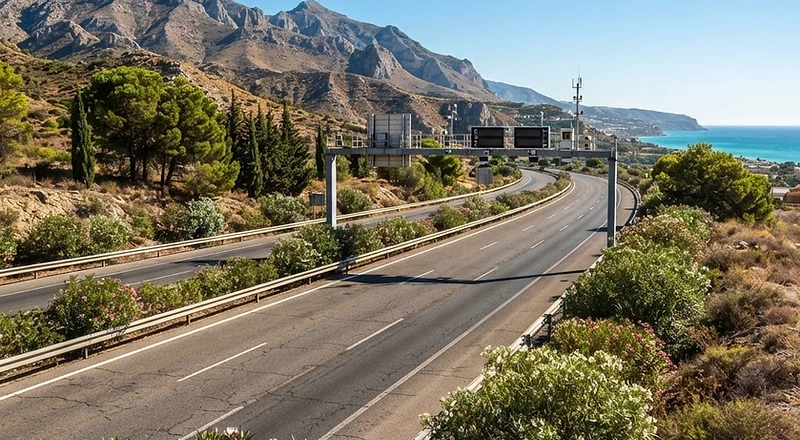
AP-7 Toll Rates Drop for Autumn as Cost Relief Hits Costa del Sol Drivers
Motorists travelling between Fuengirola and Manilva will see toll rates drop significantly from 1 October following the end of summer peak pricing.
Low-Season Rates Return Overnight
Just after midnight, toll barriers along the western Costa del Sol quietly reset to winter pricing, handing immediate relief to thousands of drivers who have spent the summer paying premium rates to avoid the clogged A-7. From 1 October 2026, the peak seasonal surcharge on the AP-7 toll motorway has lapsed, and the full one-way run between Fuengirola and Manilva now costs roughly €12, down from the €19.55 charged throughout the high season.
The change is automatic rather than announced with fanfare — it happens every year under the terms of the concession governing this stretch of motorway — but for commuters who track every euro spent getting to work, it still lands like a small windfall. Anyone who drives the corridor daily will have noticed the toll booths flashing different figures from the early hours.
How the Tiered System Works
The AP-7's pricing structure is built around tourist demand rather than distance alone. Rates climb sharply during July, August and September, plus major holiday weeks, when traffic volumes spike and the operator — under a long-standing national concession — applies its highest tariff band. For visitors renting a car for a fortnight, the extra cost barely registers. For the delivery drivers, tradespeople and office workers who use the road every single day of the year, those three months add up to a significant and largely unavoidable expense.
With the switch back to low-season pricing, individual toll gantries along the route have dropped accordingly. The Marbella and Calahonda toll plazas have seen charges trimmed by roughly 35 per cent, a reduction that is immediately noticeable to anyone making the same journey twice a day. For expats commuting between residential areas such as Estepona and employment centres in Marbella or Málaga capital, the seasonal change can save upwards of €150 a month — money that, for many households, is the difference between taking the toll road and sitting in traffic on the coastal carriageway instead.
Knock-On Effect for Coastal Traffic
Toll pricing on the AP-7 has long been blamed for pushing traffic onto the free A-7, which was never designed to carry the volume of vehicles it now absorbs. Local authorities have repeatedly argued that high summer tolls force logistics firms and local drivers off the motorway and onto coastal arterial roads, worsening the bottlenecks that build up around San Pedro Alcántara, Puerto Banús and Riviera del Sol during peak months. The autumn rate cut should, at least temporarily, ease some of that pressure by making the toll road a more attractive option again for cost-conscious drivers.
What It Means for the Property Market
Road access and running costs matter to anyone weighing up where to buy on this coast, and toll pricing is part of that calculation more often than people assume. Buyers looking at developments in growth areas such as Casares Costa, Duquesa and northern Estepona frequently factor commuting costs into their decision, particularly if they plan to work in Marbella or send children to international schools along the coast. Lower year-round tolls make hillside and inland-facing properties a more practical daily commute, which in turn supports demand in those areas. Investment activity tracked by firms like Marbella New Homes continues to reflect this pattern, with international buyers increasingly drawn to quieter residential pockets that remain within easy, affordable reach of the coast's business and retail hubs.
Calls for a Permanent Fix Continue
The autumn reduction, welcome as it is, has done little to quiet long-running complaints from town halls along the western coast. Local business federations and municipal officials continue to press the Ministry of Transport in Madrid for permanent discounts or fixed commuter rates, pointing to concession arrangements already in place on toll roads in Galicia and Catalunya as evidence that cheaper, year-round pricing is achievable elsewhere in Spain.
Meanwhile, winter roadworks and the installation of acoustic barriers are continuing along adjacent sections of the motorway, adding another layer of disruption for regular users. Civic groups argue that until a genuine free alternative exists, or a proper subsidy scheme is introduced for residents who use the road out of necessity rather than choice, seasonal price drops like this one will remain a welcome but temporary fix rather than a lasting solution for the people who drive this corridor all year round.
Related news


Álora Celebrates Historic Culinary Legacy with Annual Perotas Soup Festivities
Álora marks the historic tradition of its agricultural harvest dish as culinary lovers gather in the Guadalhorce Valley for the iconic Perotas Soup Day.


Yunquera Fair Launches Autumn Festivities with Deep Mountain Cultural Traditions
Yunquera enters its autumn celebrations this week, drawing visitors into the dramatic Sierra de las Nieves with folk music, religious processions and mountain hospitality.


Costa del Sol Hospitality Leaders Contest Rigid Coastal Environmental Rules
Beach restaurant operators and chiringuito federations across the coast launch talks with authorities to modernise restrictive coastal concession regulations.