
Archaeologists Uncover Roman Theatre Seating in Antequera
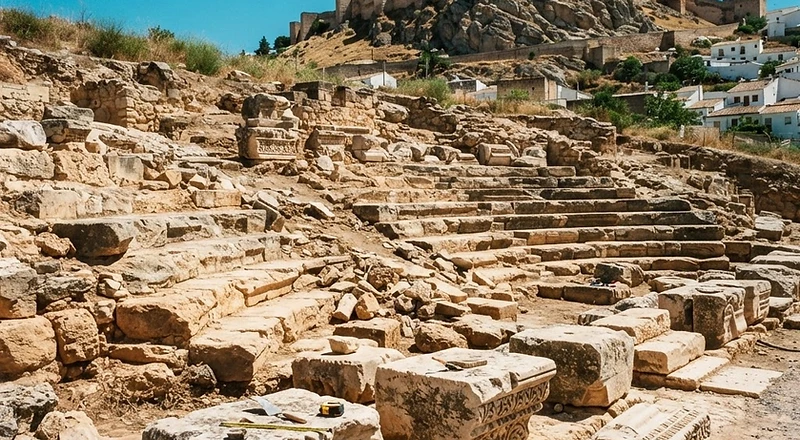
Excavators in inland Antequera have unearthed remarkably preserved stone spectator seating from the town's hidden Roman theatre.
Roman Seating Emerges Beneath Antequera's Old Town
Workers clearing sediment beneath the historic centre of Antequera have uncovered something rare: rows of limestone seating from the town's Roman theatre, still holding their original shape after nearly two millennia underground. Excavation supervisors confirmed the find earlier this week, describing the tiers as remarkably intact for a structure of this age.
The discovery matters beyond the stonework itself. It gives archaeologists firmer evidence of the physical scale of Roman Singilia Barba, the settlement that once occupied the ground where modern Antequera now stands, and reinforces the town's long-argued case for having been an administrative crossroads within Roman Hispania. For a town whose identity has always leaned heavily on its layered history — Bronze Age dolmens, Moorish fortifications, Renaissance churches — adding a confirmed Roman theatre to that timeline is no small thing.
What the Dig Has Revealed So Far
The newly exposed blocks form part of the cavea, the curved, stepped seating area where Roman audiences once watched drama performances and attended public assemblies. Archaeologists working the site say the masonry survived so well precisely because it had been sealed beneath layers of sediment for centuries, shielded from erosion and later construction.
Slow, careful work with brushes and hand tools has brought chisel marks, drainage channels and gangway steps back into view — details sharp enough to suggest skilled Roman engineering rather than a modest provincial afterthought. The scale of the seating points to a civic venue built for a substantial, reasonably prosperous population, comparable in ambition to Roman theatre remains already known from coastal Malaca (modern Málaga) and from Acinipo, the hilltop Roman site near Ronda. Taken together, the three sites help sketch a picture of how densely Roman infrastructure once covered this stretch of southern Spain.
Fitting the Find into Antequera's Tourism Circuit
Antequera's municipal culture department has been clear that no museum display or permanent presentation will happen until the site is properly consolidated and stabilised — a process that typically takes precedence over public access in finds of this fragility. Once that groundwork is done, officials want the theatre folded into the town's existing heritage trail, linking it directly to the Alcazaba fortress overlooking the old town and to the UNESCO-listed Dolmens archaeological complex on the outskirts.
For a region whose tourism identity is still dominated by beaches and golf courses, that's a deliberate strategic move. Local authorities are framing the theatre as a cultural draw capable of pulling visitors inland, giving Antequera a stronger footing alongside better-known heritage towns and adding another reason for coastal visitors to make the drive up from the Costa del Sol proper. Guided academic visits for regional research teams are pencilled in to start next month, giving specialists first access before any wider public opening is considered. In the meantime, structural engineers are designing protective coverings to shield the exposed limestone from the coming winter's rainfall — a practical necessity given how quickly weather damage can undo months of careful excavation.
The Next Phase of Digging
Excavation teams plan to extend their test trenches into neighbouring plots to map the full footprint of the orchestra and the stage building, the two elements still missing from the picture. That work will determine just how large the original theatre actually was and whether further seating tiers, or structural remains, lie beneath adjoining properties.
Andalucía's regional ministry of culture is expected to work alongside Antequera's municipal authorities to fund this next stage of cataloguing and analysis. Once restoration work is complete, findings from the site are slated for temporary display at the municipal museum, giving residents and visitors a first proper look at what has been sitting, hidden, beneath the town centre all along.
For homeowners and expats settled around Antequera and further along the Costa del Sol, discoveries like this tend to have a quieter but real effect: they add cultural weight to a town's profile, which in turn shapes its appeal to buyers and second-home owners looking for somewhere with more depth than a purely coastal address. Anyone tracking property or lifestyle opportunities in the wider region can find current listings and local market context through Marbella New Homes.
Related news

Álora Celebrates Historic Culinary Legacy with Annual Perotas Soup Festivities
Álora marks the historic tradition of its agricultural harvest dish as culinary lovers gather in the Guadalhorce Valley for the iconic Perotas Soup Day.

Yunquera Fair Launches Autumn Festivities with Deep Mountain Cultural Traditions
Yunquera enters its autumn celebrations this week, drawing visitors into the dramatic Sierra de las Nieves with folk music, religious processions and mountain hospitality.

Costa del Sol Hospitality Leaders Contest Rigid Coastal Environmental Rules
Beach restaurant operators and chiringuito federations across the coast launch talks with authorities to modernise restrictive coastal concession regulations.