
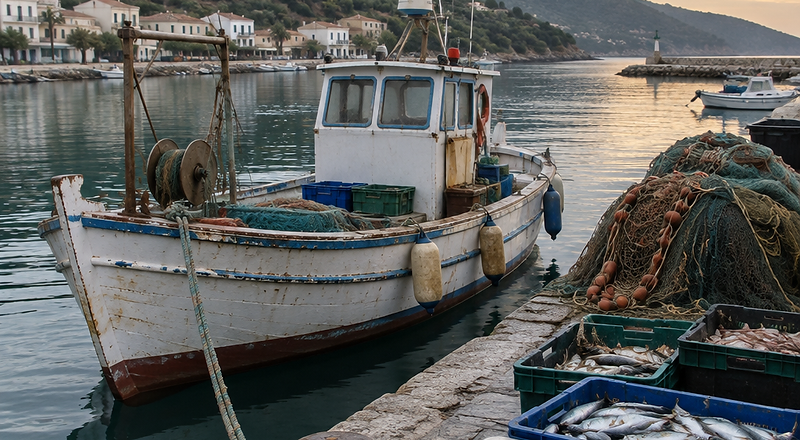
Axarquia Illegal Fishing Network Dismantled: 27 Investigated
Guardia Civil operation Modicum dismantles a network selling undersized and protected fish along the Axarquia coast, with 27 people under investigation.
region: Axarquia | category: Crime & Safety
The Guardia Civil's nature protection service, Seprona, has dismantled a well organised network dedicated to the illegal capture, distribution and sale of undersized fish and protected species along the coast of the Axarquia. Twenty seven people are under investigation in a case that investigators describe as one of the most serious illegal fishing operations uncovered on this stretch of the Malaga coast in recent years.
The operation, given the codename Modicum, set out from a simple observation: fish that should never have reached a plate was being sold outside every legal control. According to the investigation, the network systematically circumvented the official channels through which catch is marketed, first and foremost the fish market, where producers must present their fish under rules that guarantee its origin. It also skipped the mandatory health and veterinary checks that apply to any product destined for human consumption.
The way the fish travelled made matters worse. Investigators found that products were moved without maintaining the required cold chain and without the traceability rules that allow inspectors to establish where a catch was taken, when and by whom. In practical terms, the network operated in parallel to the legal fishing sector, selling outside the market, outside the checks and outside the record.
The operation closed with the search and inspection of five properties and six vessels. Officers seized sixteen items of illegal fishing gear, four vessels, six outboard motors and a large quantity of ancillary equipment used for the clandestine storage and transport of the catch.
The twenty seven people under investigation, according to investigators, formed part of four interconnected criminal networks operating along the Malaga coast without any health or safety measures in place. They are charged with offences against flora and fauna and with membership of a criminal organisation, the charge Spanish law reserves for structured groups rather than individual offenders.
The rules the network broke are not paperwork. Minimum sizes exist because they protect juvenile fish, the individuals that have not yet spawned and replaced themselves. Every undersized sea bass or bream that reaches a buyer is a fish removed before it has had a chance to keep the stock alive, and Mediterranean stocks, under pressure from warming water and years of intense effort, need every spawning fish they can keep. Protected species rules serve the same purpose, shielding vulnerable animals from capture altogether.
The health angle is just as real. Fish transported without refrigeration and sold without veterinary inspection can spoil in ways a buyer cannot see, and families who would never shop outside a regulated market can end up serving that same fish at home without knowing it. The reason every legitimate catch passes through the market and the checks is precisely this guarantee: that what lands on the quay has a history anyone can verify.
The case lands particularly hard in a part of the coast where fishing is identity, not just industry. The Axarquia, from Nerja down to the beaches of Velez-Malaga and the coves east of Malaga city, has lived off the sea for centuries, and its artisanal fleet is one of the most important on the Costa del Sol. The overwhelming majority of its fishermen fish within the rules, keep their gear legal and land their catch where it can be checked. Their complaint, voiced for years in one form or another, is that illegal catch competes with honest catch at prices no rule-following boat can match.
For investigators, dismantling a network of this size is only part of the answer. The other part is the market: buyers who ask where a fish comes from, and prefer the quay, the market and the shop to the van, the freezer and the message. A network of four groups selling outside the controls can only exist because someone buys.
The investigation remains open, and further developments will depend on the courts. For the coast itself, the case is a reminder that the rules around a fish are not bureaucracy, but the difference between a fishery that lasts and one that quietly empties.
Related news


Torrox Costa Crossing Accident Leaves Two Women in Hospital
Two women aged 62 and 64 remain in hospital in Velez-Malaga after an 80-year-old driver who says she did not see a red light struck them on a pedestrian crossing in Torrox Costa.


Benahavis Luxury Villa Fraud Stopped by Spanish Police
Spain's national police, working with Austrian counterparts, have broken up an attempt to buy a luxury villa in Benahavis with counterfeit banknotes, with the buyers' commission offered in gold bars.
Free Guide: Buying Property in Spain 2026
A step-by-step guide for international buyers — from NIE to the notary.
We'll send you the guide link by email too. No spam — your details stay with Marbella New Homes.