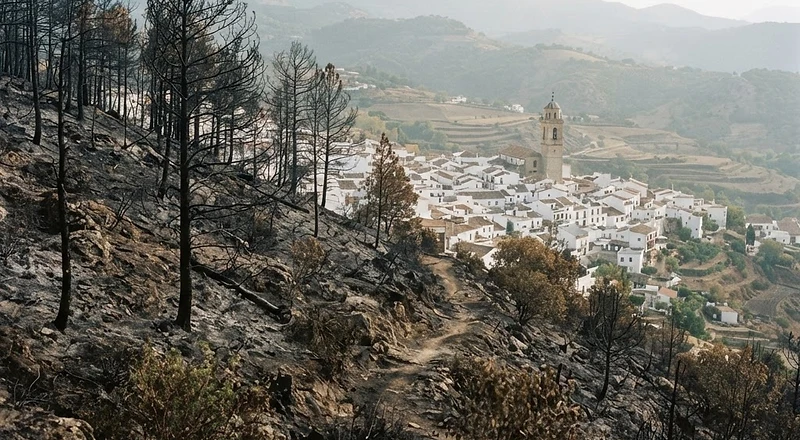
Benahavis declared disaster zone after September wildfire
Spain's Council of Ministers has declared Benahavis a zone gravely affected by a civil protection emergency nine weeks after the September wildfire, unlocking state aid and tax relief for the mountain village.
The Council of Ministers has declared Benahavis a zone gravely affected by a civil protection emergency, opening the door to state aid for the mountain village nine weeks after a forest fire tore through its hills.
The decision, taken at the weekly cabinet meeting and confirmed by the government, groups Benahavis and the neighbouring village of Igualeja as catastrophic areas for the purposes of emergency relief, placing them inside the same recovery package that also covers communities hit by the autumn storms elsewhere in Andalusia.
For residents and business owners in Benahavis, the declaration is the difference between absorbing fire losses alone and having the state share the bill. Those affected by the September fire can apply for compensation for damage to homes, second residences, businesses, equipment and infrastructure, and the municipal register will be one of the documents the administration uses to verify who qualifies.
Two fiscal measures stand out in the fine print. Affected property owners are exempt from payment of the IBI, the annual real estate tax, on damaged properties, and businesses affected by the fire will see a reduction in their IAE, the tax on economic activity. For a village whose economy leans on restaurants, small hotels and trades connected to the tourist season, a lighter tax bill in the year after a fire is not a detail. It is working capital.
The September fire that prompted the declaration burned across the slopes above Benahavis in the mountains that separate the coast from the Ronda highlands. Firefighting teams fought it over several days, and while the village itself was spared the worst, the burned surface left scars that will take years to heal and risks that residents now live with daily: unstable slopes, fallen timber and the near certainty that heavy autumn rain will wash ash and soil down the ravines.
That risk is why the cabinet moved now. The same emergency declaration covers areas struck by the torrential rains and floods of early and mid October, and the government has bundled the fire zones and the flood zones into one package so that municipalities do not have to fight two separate bureaucratic battles at the height of the storm season.
Benahavis sits a short drive inland from the A-7 motorway between Estepona and Marbella, in the valley of the Guadalmina river. It is known for two things: an extraordinary concentration of restaurants for a village of its size, and a setting that mixes river pools, mountain trails and some of the most expensive residential developments on the western Costa del Sol. A fire on its hills was never just an environmental event. It touched the village's main source of income, because the tourists who fill those restaurants come precisely for the green landscape the fire consumed.
The practical question for locals is what to do next. Experience with these declarations says three things. First, keep every invoice, photograph and insurance report linked to the fire, because the aid process is documentary and unforgiving. Second, watch the official announcements from the town hall and the provincial administration for the opening of the application windows, which usually follow the declaration by weeks rather than months. Third, do not assume that any single measure covers everything: the package combines tax relief, subsidies and lines of credit, and each has its own deadline.
The declaration also reads as a warning for the rest of the region. Benahavis burned in September. Fires have flared again this week on the eastern end of the Costa del Sol, and the same dry summer that primed those hills primed every other one. The pattern of recent years is consistent: extreme heat in July and August, fire on the mountain slopes in September, floods in October. The villages that come out of that cycle best are the ones that treat the aftermath as seriously as the emergency.
For Benahavis, the cabinet decision will not bring the pine cover back. What it does is give the village a financial path through the next twelve months: taxes suspended for properties the fire damaged, relief for the businesses that employ most of its neighbours, and a formal recognition, signed in Madrid, that what happened on those hills was a disaster and not a nuisance.
Related news


Golden Visa Spain 2026: Status and the Alternatives Now
Golden Visa Spain closed on 3 April 2025. What existing holders keep, and the 2026 alternatives: the non-lucrative visa at 28,800 euros a year and the digital nomad visa.


Empadronamiento Spain: How to Register on the Costa del Sol
Empadronamiento on the Costa del Sol: the documents you need, how to book appointments in Marbella, Fuengirola, Mijas and Estepona, and the two-year renewal rule.


Non-Resident Tax Spain: Modelo 210 Deadlines for 2027
Non-resident tax in Spain explained: how Modelo 210 works for Costa del Sol property owners, who pays 19 or 24 percent, and what Orden HAC/623/2026 changed about the deadlines for 2026 and 2027.
Free Guide: Buying Property in Spain 2026
A step-by-step guide for international buyers — from NIE to the notary.
We'll send you the guide link by email too. No spam — your details stay with Marbella New Homes.