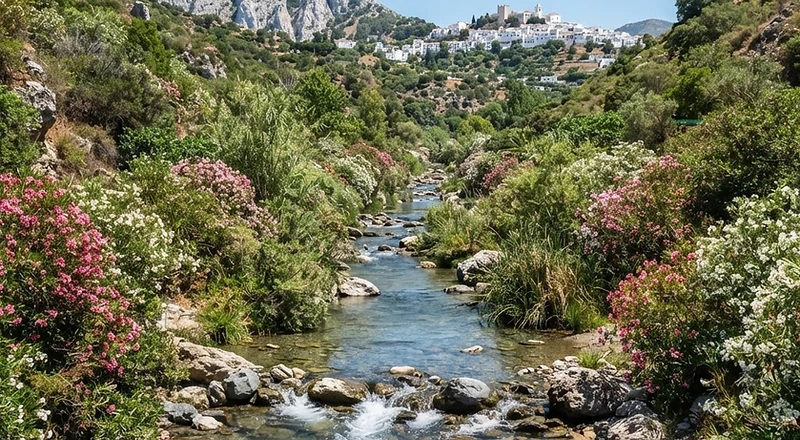
Casares Launches Riverbed Ecological Restoration Plan
Casares Town Hall commits substantial environmental funds to restore the natural biodiversity and riverbanks of the Manilva river corridor.
Clearing the Invasive Reeds
Work has begun along the banks of the Río Manilva, where conservation teams are tackling one of the most stubborn problems facing the river system that marks the boundary between Casares and its coastal neighbour. The target is Arundo donax, the towering cane reed that has spread unchecked through the lower valley for decades, soaking up groundwater at a rate native vegetation never would and forming dense, woody blockages that turn manageable winter rain into genuine flood risk.
Forestry crews are using low-impact machinery to strip back more than four linear kilometres of riverbank choked by the reed. It's a painstaking job — cane doesn't simply die when cut, it regrows from rhizomes left in the soil, so removal has to be thorough rather than quick. Once cleared, the ground will be replanted with native riparian species: white poplars, oleanders, tamarisks and willows, all chosen because their root systems bind riverbanks together rather than merely sitting on top of the soil the way cane does. Over time these plantings should offer nesting cover for kingfishers, European pond turtles and birds of prey that rely on the corridor to move between the Sierra Bermeja and the coast.
Why the Baños de la Hedionda Matter
The stretch of river under restoration runs close to the Baños de la Hedionda, the sulphur-rich thermal baths whose origins are usually traced to Roman times and which remain a genuine draw for walkers and day-trippers throughout autumn. Anyone who has visited knows the setting is part of the appeal — stone pools fed by warm mineral water, surrounded by rough countryside rather than any kind of polished spa development. That informality is also the site's vulnerability. Footbridges and the paths leading to the baths have taken a battering in recent winters, with storm run-off from the Sierra Bermeja causing minor subsidence that the Town Hall has had to patch up more than once.
The restoration plan addresses this directly. By reintroducing natural pebble bypasses and shallow gravel berms, engineers aim to slow the speed at which storm water drops from the limestone heights above before it reaches the valley floor. In practice, that should mean less erosive force hitting the footbridges and walking trails each time there's a heavy downpour — a modest but meaningful change for a path network that sees heavy footfall from both residents and visiting hikers.
What It Means on the Ground
For people living locally, the most visible next step will be the educational nature walks the council has scheduled over the coming weeks, led by environmental biologists and open to resident families as well as the area's sizeable international community. These sessions are intended to explain the planting work as it happens rather than after the fact, giving residents a chance to see which species are going in and why, rather than simply noticing new greenery appear along a path they walk regularly.
For homeowners and property buyers with an interest in the Casares and Manilva river valleys, the project carries a practical dimension too. Flood mitigation work of this kind tends to reduce long-term risk to land and access routes near watercourses, which matters to anyone weighing up a rural plot or a finca within reach of the river. Those exploring property options in the area can find more detail through Marbella New Homes, which tracks developments across the western Costa del Sol.
A Wider Strategy for Casares
The riverbed scheme sits within a broader municipal approach that has become increasingly common across inland Andalusian towns facing pressure from coastal growth: protect the green corridors first, build everything else around them. Casares has leaned into this identity for years, promoting its whitewashed old town and surrounding countryside as a counterpoint to the denser development nearer the sea.
With machinery already working through the valley and replanting due to follow close behind the reed clearance, the council is treating this as an active, visible commitment rather than a paper policy. Whether it holds up through the next heavy winter will be the real test, but for now the Río Manilva restoration gives Casares a tangible marker of how it intends to manage growth pressure on its most sensitive natural asset.
Related news


Casares Quiet Luxury Turn Draws Top End Property Buyers
Luxury in Casares is the story of the season on the western Costa del Sol, as Finca Cortesin attracts branded residences, hotel investment and international buyers.

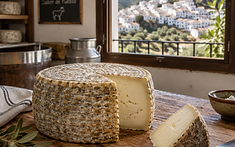
Casares Cheese Heads to World Cheese Awards in Cordoba
Casares cheese goes global: Queseria Crestellina enters its semi-cured Payoya goat cheese in the World Cheese Awards in Cordoba for the first time.


Casares cancels Halloween events as Spain mourns train crash
Casares and neighbouring Estepona cancelled their Halloween programmes for national mourning after the Urda train disaster, while Manilva and Marbella moved theirs to Sunday.
Free Guide: Buying Property in Spain 2026
A step-by-step guide for international buyers — from NIE to the notary.
We'll send you the guide link by email too. No spam — your details stay with Marbella New Homes.