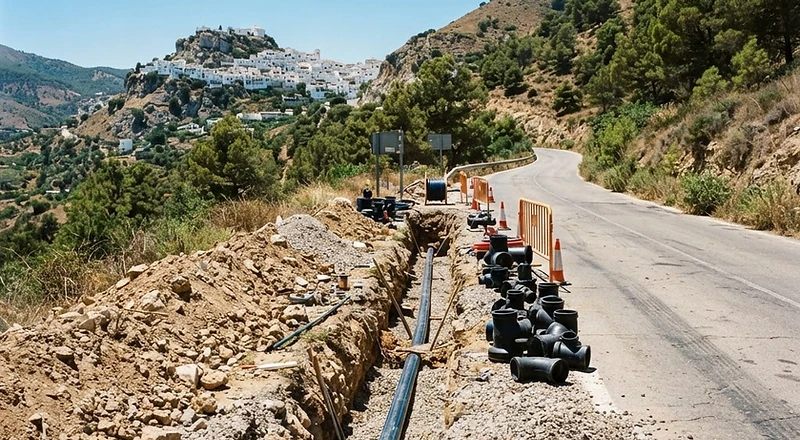
Casares Modernises Regional Water Grid Infrastructure
A multi-million euro regional water overhaul brings pipe renewals and leakage prevention upgrades to Casares and neighboring western municipalities.
Specialist survey vans and inspection crews have become a common sight along municipal access roads in Casares this week, as public water operator Acosol accelerates field diagnostics across the local supply grid. The stepped-up activity follows the release of funding under the sweeping €175 million European Investment Bank framework, signed earlier this year to modernise supply and sanitation networks across the Western Costa del Sol. Spanning from 2025 to 2029, the broader programme aims to protect basic utilities for roughly one million permanent residents, a figure that jumps past 1.4 million when holidaymakers arrive in the heat of July and August.
Tackling Infiltration and Network Loss
Casares presents engineers with a difficult physical footprint. The municipality divides sharply between its historic white village clinging to the slopes beneath the Sierra Crestellina and the sprawling residential complexes strung out along the Mediterranean shore. This elevation gap forces high mechanical pressure onto uphill pumping lines, while coastal collectors run uncomfortably close to sea level. Under the current schedule, Acosol teams are paying particular attention to low-lying coastal collectors that have suffered from chronic pipe fatigue and brackish groundwater seepage.
Across the eleven member towns of the Western Costa del Sol, more than twenty kilometres of ageing sewerage collectors and over thirty kilometres of potable water mains will be systematically refurbished or replaced. In Casares, halting hidden pipe breaks along coastal links does two jobs at once: it protects ground quality near beaches and stops treated drinking water from bleeding into sandy soil. For residents who have seen water pressure dip during peak holiday seasons, cutting these distribution losses will ensure more reliable taps and garden feeds year-round.
Upgrades for Coastal Urbanisations
The coastal belt of Casares has seen significant residential expansion in recent years, drawing thousands of international buyers seeking apartments and villas around Doña Julia, Casares Costa, and Finca Cortesin. For property hunters consulting Marbella New Homes regarding developments along this strip, reliable utility backbones have become just as decisive as south-facing terraces and community pools. Underground infrastructure must keep pace with the cranes on the skyline, especially as older coastal installations reach the end of their operational lifespan.
Local authorities have moved quickly to reassure urbanisation committees and local business owners that diagnostic work using closed-circuit pipe cameras and acoustic sensors will cause minimal disruption to traffic along the A-7 and interior link roads. Heavy pipe replacements will roll out in short, trench-covered phases rather than long, open excavations. Community administrators will receive formal notices through their town hall representatives well before any temporary shut-offs take place, allowing residents to plan their domestic routines without surprise outages.
Preparing for Long-Term Climate Pressures
While steady springtime downpours offered temporary relief to regional reservoirs like La Concepción, nobody on the coast is under the illusion that drought risks have vanished. Long stretches of dry weather remain a standard feature of southern Andalusian life, and municipal leaders recognise that building network resilience during quieter months is the only sensible defence. Modernising pipe circuits and eliminating treated water leaks ensures Casares will not face emergency water restrictions the moment rainfall figures taper off again.
The municipal overhaul also coordinates with larger regional facilities under Acosol's umbrella, including the local EDAR Casares treatment plant and wider water recycling networks. Expanding tertiary treatment allows recycled wastewater to take over the burden of irrigating golf courses and municipal greenery, leaving potable reserves untouched for household taps. Combined with wider regional works—such as renewable power upgrades at the Marbella desalination plant and storage expansions at the Río Verde treatment facility—Casares is quietly securing the basic resources it needs to sustain both long-term residents and the seasonal economy.
Related news

Casares Launches Riverbed Ecological Restoration Plan
Casares Town Hall commits substantial environmental funds to restore the natural biodiversity and riverbanks of the Manilva river corridor.


Casares Secures €3.8 Million European Fund to Restore Historic Moorish Fortress
The whitewashed clifftop village of Casares announces landmark public funding to restore its ancient castle ramparts and open panoramic tourist walks.

Casares Upgrades Waste Water Infrastructure Under Regional Water Overhaul
Critical sanitation and treatment facilities in Casares receive upgrades through Acosol's network modernisation programme to protect the local environment.