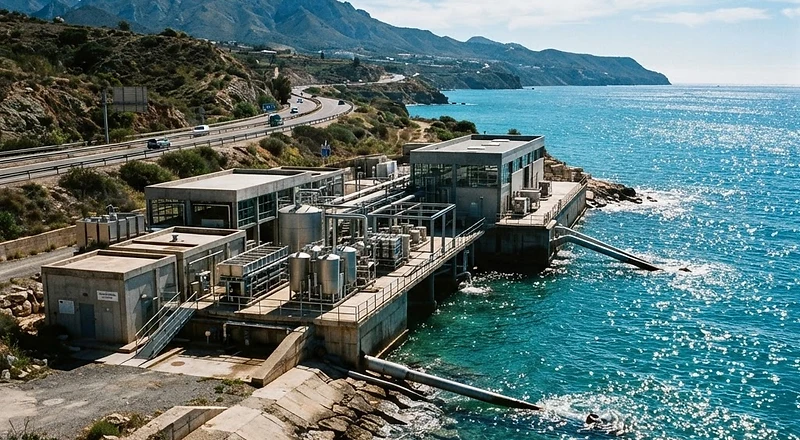
Costa del Sol: Desalination Plant Expands Capacity for 2027
Water authorities move forward with major infrastructure works to modernise and double output across western coastal water treatment plants.
Work Under Way From Torremolinos to Manilva
Diggers are already on site at several coastal pumping stations between Torremolinos and Manilva, as engineering teams begin the groundwork and component installation that will underpin the Costa del Sol's drinking water supply for years to come. The works mark a shift away from the emergency drought measures of recent summers towards something more permanent: infrastructure built to cope with demand rather than simply react to shortages.
The push comes from Acosol, the municipal consortium responsible for managing water across much of the western Costa del Sol. Acosol has long supplemented reservoir supplies with desalinated water, but the ageing intake facilities and pumping links have struggled to keep pace with both population growth and the tourist influx that swells coastal towns every summer. The current works aim to lift daily desalinated water output significantly, reducing how heavily the region leans on the La Concepción reservoir, which has dropped to worryingly low levels during several recent dry winters.
Engineering Upgrades Along the Western Coast
Crews are expanding membrane capacity at the desalination plants and upgrading the electrical substations that power them, since higher processing loads demand considerably more energy than the current setup was designed for. Once complete, the modernised pipeline network should let treated water move more freely both eastward and westward along the coastal corridor, rather than being tied to whichever plant happens to be nearest a given town. That flexibility matters most in August, when the resident population of towns like Estepona and Marbella can double or triple almost overnight.
Regional planners have set aside more than €30 million for secondary network links, a figure that reflects just how patchy supply has become in some hillside urbanisations. Residents in elevated developments have reported pressure drops and outright cuts during routine maintenance work in the past, an issue that has dogged planning applications and left some homeowners understandably wary. The new secondary links are intended to even out pressure across these higher areas, so a scheduled repair in one zone no longer means reduced flow somewhere else.
What It Means for Homeowners and Investors
For anyone weighing up a move to the Costa del Sol, or already settled here, reliable water supply is not an abstract concern. It affects everything from garden irrigation restrictions to whether a new development gets planning sign-off in the first place. Overseas buyers in particular tend to ask pointed questions about utilities before committing to a purchase, and a documented, modernised supply chain gives estate agents and developers firmer ground to stand on.
That is especially relevant in expanding districts such as Estepona and Casares, where new residential projects have sometimes faced delays or added scrutiny over whether local infrastructure could support them. A guaranteed municipal supply, backed by Acosol's upgraded network, gives legal and practical clarity to developments handled by firms such as Marbella New Homes, and should help smooth the path for projects still in the pipeline.
Timeline: Testing Before Christmas, Commissioning in Spring
According to engineers overseeing the works, the first phase of the upgraded intake system is due to undergo dry testing before Christmas. Assuming that goes to plan, full commercial commissioning is pencilled in for early spring, well ahead of the peak summer season when demand on the network is at its highest.
Town halls along the coast have welcomed the progress, with several officials pointing out that water security underpins almost every other ambition the region has, from attracting new residents to supporting the construction sector that has become such a fixture of the local economy. Whether the timeline holds will depend partly on how testing goes over the coming weeks, but for now the message from local authorities is one of cautious confidence that this summer's supply worries will not be repeated in 2027.
Related news


Cost of Living on the Costa del Sol: A Real Monthly Budget
Cost of living on the Costa del Sol in 2026: real rents town by town, electricity, water and internet bills, menu del dia prices and sample monthly budgets for singles, couples and owners.


Malaga to Marbella Bus Guide: Fares, Timetables and Routes
Malaga to Marbella bus guide: the L-307 express, the coastal M-320 and the airport coach from Terminal 3, with 2026 zone fares from 6.25 euros cash or 3.07 with the consortium card.


NIE Number in Spain: The Complete Non-Resident Guide to Bank, Mortgage and Will
NIE number in Spain explained end to end for non-residents: how to apply, what banks want for an account, how a 60 to 70 percent mortgage works, and why a Spanish will and inheritance tax belong on the same list.
Free Guide: Buying Property in Spain 2026
A step-by-step guide for international buyers — from NIE to the notary.
We'll send you the guide link by email too. No spam — your details stay with Marbella New Homes.