
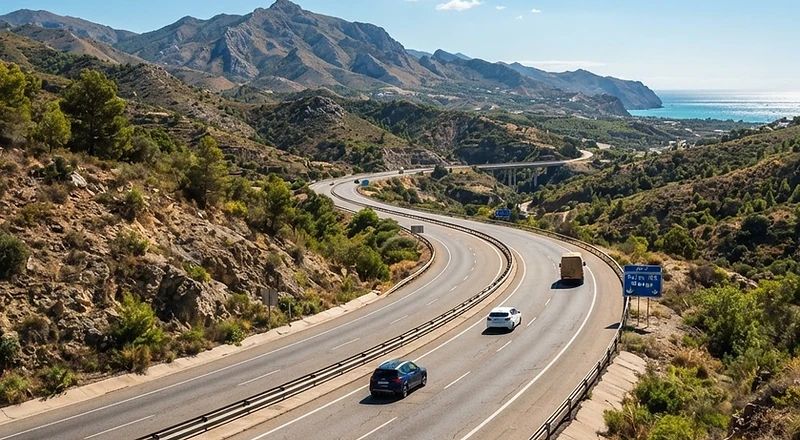
Costa del Sol Mayors Step Up Calls for AP-7 Toll Removal
Municipal leaders across the coastal belt urge the central ministry to waive seasonal motorway tolls to relieve gridlock on the overwhelmed A-7 coastal highway.
Mayors Unite Against AP-7 Toll Charges
Morning traffic on the A-7 now regularly grinds to a halt between Málaga and Estepona, and town halls along the coast have had enough. Mayors from Fuengirola, Mijas, Marbella and Estepona have renewed a coordinated campaign demanding that Madrid scrap the daily tariffs charged on the AP-7 motorway, arguing that the free coastal road simply cannot cope with the volume of traffic being funnelled onto it.
The AP-7 was built as a relief route, a modern dual carriageway running parallel to the older coastal highway, designed to take pressure off the A-7 and shorten journey times for anyone prepared to pay a toll. In practice, say local leaders, that relief has never materialised for ordinary residents. Tens of thousands of light vehicles and heavy lorries use the A-7 every morning, and what should be a routine commute between towns such as Fuengirola and Marbella can turn into a multi-kilometre tailback the moment there is even a minor collision.
Why Drivers Avoid the Toll Road
The maths explains a lot. Peak-time tariffs on the AP-7 can exceed ten euros for a single one-way trip, a cost that adds up fast for anyone driving to work five or six days a week, or for haulage firms running multiple deliveries a day along the coast. Faced with that bill, most local commuters and light logistics operators default to the free road, even knowing it means sitting in traffic. The result is a lopsided coastal transport network: a fast, largely empty motorway running alongside a congested, overloaded one.
Municipal representatives have now formally asked the Ministry of Transport to introduce either an emergency waiver of tolls or, failing that, steep subscription discounts for registered local workers and frequent users. They point to similar relief schemes already rolled out on comparable toll roads in northern Spain as proof that such measures are workable and have precedent within the Spanish road network. For coastal town halls, the argument is straightforward: if the AP-7 is genuinely meant to relieve pressure on the A-7, its pricing structure needs to reflect that purpose rather than work against it.
What Gridlock Costs the Coast
The economic case being put to central government goes well beyond driver frustration. Business organisations and hotel federations operating along the Costa del Sol have joined the mayors in flagging the practical cost of daily bottlenecks. Delivery schedules slip regularly, service engineers and tradespeople lose hours simply getting between jobs, and airport transfer operators report frequent delays feeding into peak morning flight departures from Málaga Airport. For a region whose economy depends heavily on tourism, hospitality and a steady flow of people and goods along a narrow coastal corridor, that kind of friction is not a minor inconvenience — it is a recurring drag on productivity.
For residents and expats living in towns strung along this stretch of coast, the practical implications are already familiar. Anyone commuting for work, running a business that depends on deliveries, or simply trying to get children to school on time knows the unpredictability of the A-7 at peak hours. Homeowners considering a move to the area, including buyers working with agencies such as Marbella New Homes, are increasingly asking about proximity to the AP-7 and realistic commute times rather than relying on distances alone, precisely because the free road can be so unreliable during rush hour.
Where Things Stand With Madrid
Central government transport officials have acknowledged the representations made by coastal councils and have committed to reviewing traffic flow models this autumn. That review is being watched closely by municipal leaders, who have made clear they intend to keep coordinated pressure on parliament rather than treat any ministerial acknowledgement as a resolution in itself. Until concrete relief measures are actually signed into law, mayors from Fuengirola to Estepona say they will continue pushing jointly, arguing that the current toll structure on the AP-7 works against the very congestion relief it was designed to deliver.
For now, commuters, delivery drivers and airport transfer services along the Costa del Sol are left navigating the same daily uncertainty on the A-7, waiting to see whether autumn's review produces anything more than another round of promises.
Related news


Álora Celebrates Historic Culinary Legacy with Annual Perotas Soup Festivities
Álora marks the historic tradition of its agricultural harvest dish as culinary lovers gather in the Guadalhorce Valley for the iconic Perotas Soup Day.


Yunquera Fair Launches Autumn Festivities with Deep Mountain Cultural Traditions
Yunquera enters its autumn celebrations this week, drawing visitors into the dramatic Sierra de las Nieves with folk music, religious processions and mountain hospitality.


Costa del Sol Hospitality Leaders Contest Rigid Coastal Environmental Rules
Beach restaurant operators and chiringuito federations across the coast launch talks with authorities to modernise restrictive coastal concession regulations.