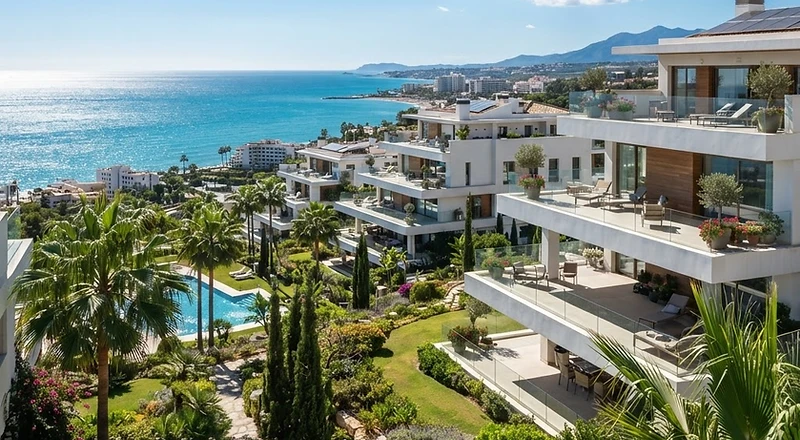
Costa del Sol Property Prices: Average Values Hit €4,053/sqm
Fresh autumn real estate data shows sustained price growth across the western Costa del Sol, driven by tight supply and overseas buyers.
Prices Keep Climbing Despite Talk of a Ceiling
Fresh benchmark figures released this September confirm what most agents on the ground already suspected: the Costa del Sol property market shows no real sign of slowing. Apartments now average €4,053 per square metre, according to the latest quarterly survey, a rise of 6.68% year-on-year. Detached houses have climbed a similar 6.55% annually, pushing the average coastal villa to €3,560 per square metre. For a market many predicted would cool after several years of near-continuous growth, the figures point instead to something steadier: a structurally supported climb rather than a speculative spike.
That distinction matters. Buyers, sellers and letting agents up and down the coast have spent the past two years wondering whether prices might finally plateau. The latest data suggests otherwise, and the reasons behind the resilience are worth unpacking province by province.
Western Belt Outpaces Regional Averages
The coast-wide average masks some sharp regional disparities. Prime hotspots along the western stretch continue to command a substantial premium over the baseline figure, and nowhere is that more visible than in Marbella. Asking prices there have held firmly above €5,400 per square metre, with Benahavís tracking close behind and select pockets of Estepona now commanding similarly elevated rates. Buyers researching options in these areas often turn to specialists such as Marbella New Homes, given the complexity of navigating off-plan schemes and premium resale stock in this part of the coast.
Further east, towards Fuengirola and Mijas Costa, the picture looks a little different but no less competitive. Apartments in these towns are shifting quickly, particularly where developers have built in modern energy-efficiency standards and shared amenities such as pools, gyms or co-working spaces. For buyers priced out of Marbella's premium bracket, these towns have become the practical alternative, offering good rail and road links into the wider coastal urban belt without the same asking-price ceiling.
Structural Land Shortages Floor the Market
The underlying cause of this sustained growth, according to market analysts, is straightforward scarcity. There simply isn't enough zoned, shovel-ready land left along much of the coastline to meet demand. Municipal planning frameworks across Costa del Sol towns remain strict, and the geography itself imposes hard limits: development is squeezed between the Mediterranean coastline and the mountain ridge running parallel to it, leaving little room for the kind of large-scale expansion seen in previous property cycles.
This matters because it changes the risk profile of the market. Earlier boom-and-bust cycles in Spain, most infamously the pre-2008 crash, were fuelled by speculative oversupply, with developers building far beyond genuine demand. Today's pattern looks different. New developments along the coast are predominantly pre-sold off-plan, bought either by end-users planning to live in the properties or by well-capitalised private investors taking a long-term view. That reduces the risk of the kind of panic-selling that hammered prices after the last crash, and it gives current price growth a firmer foundation.
Shift in International Buyer Demographics
The buyer profile itself has changed considerably, and much of that shift traces back to Spain's decision to scrap its national Golden Visa scheme. Under that programme, non-EU buyers could secure residency rights through property investment, which encouraged a wave of purchases driven more by visa strategy than by any intention to actually live on the coast.
With that route closed, estate agencies report a clear rise in the proportion of buyers purchasing homes for genuine, permanent relocation. British, Nordic, German and American nationals feature heavily among this group, many of them combining a move to Andalucía with remote work arrangements. The region's favourable tax provisions for foreign residents, often referred to locally as the expat tax regime, continue to sweeten the calculation for those weighing up a permanent move against renting or staying put elsewhere in Europe.
For buyers working within the mid-market band of €400,000 to €600,000, competition remains fiercest for two-bedroom modern apartments, which continue to be the most sought-after asset class along the entire Costa del Sol. Given the land constraints already limiting new supply, that segment looks set to stay tight for the foreseeable future, and anyone house-hunting within that price bracket should expect to move quickly once a suitable property comes to market.
Related news


Álora Celebrates Historic Culinary Legacy with Annual Perotas Soup Festivities
Álora marks the historic tradition of its agricultural harvest dish as culinary lovers gather in the Guadalhorce Valley for the iconic Perotas Soup Day.


Yunquera Fair Launches Autumn Festivities with Deep Mountain Cultural Traditions
Yunquera enters its autumn celebrations this week, drawing visitors into the dramatic Sierra de las Nieves with folk music, religious processions and mountain hospitality.


Costa del Sol Hospitality Leaders Contest Rigid Coastal Environmental Rules
Beach restaurant operators and chiringuito federations across the coast launch talks with authorities to modernise restrictive coastal concession regulations.