
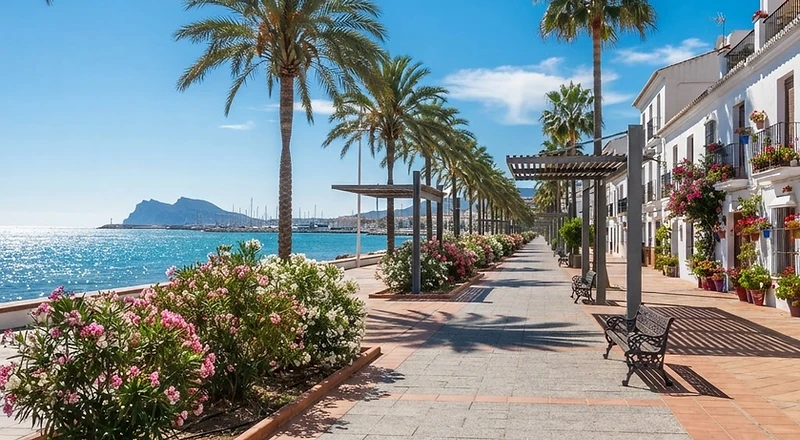
Estepona Launches €4.2 Million Overhaul to Expand West Coast Boulevard Green Corridors
Estepona municipality initiates a sweeping transformation of its western ring routes, creating shaded pedestrian avenues and native flora corridors.
Diggers Move In On Estepona's Western Edge
Diggers and surveying crews arrived on Estepona's western perimeter this Tuesday, marking the start of a €4.2 million urban regeneration scheme aimed at stitching outlying neighbourhoods back into the town centre. The works target a roughly two-kilometre stretch running from the Parque Central district down towards the roads leading into the marina, where tarmac verges and broken kerbstones have long been a sore point for residents walking or cycling into town.
Council engineers describe the corridor as one of the last major gaps in Estepona's pedestrian network. Cracked pavements and patchy lighting along this stretch have made the walk from the newer residential areas inland to the seafront and old town awkward, particularly for families with pushchairs, older residents, and anyone relying on a bike rather than a car. The new scheme replaces those worn surfaces with granite-paved walkways and substantial landscaping, extending a template the town has used successfully elsewhere.
Extending the Garden City Model
Estepona has spent the past decade rebuilding its reputation around greenery, earning recognition as the so-called 'Garden of the Costa del Sol' after pedestrianising large sections of its historic centre and filling balconies and side streets with flowerpots. That approach has become something of a civic trademark, drawing day-trippers from along the coast specifically to photograph the flower-lined lanes. This latest phase pushes the same philosophy beyond the old town and into more functional, car-dependent districts, where the aim is less about tourist appeal and more about easing daily life for people who actually live there.
Landscape plans call for more than 1,800 trees and shrubs, including jacarandas, citrus trees and ornamental olives, chosen for their tolerance of the coastal climate and relatively low water demand. Irrigation will run on a sub-surface drip system fed by recycled, non-potable water drawn from the municipal supply, reducing the strain on drinking water reserves during the drier summer months when the town's population swells with visitors.
A Continuous Route for Cyclists and Pedestrians
The centrepiece of the works is a segregated cycleway, three metres wide, running the length of the boulevard. It will connect directly with the existing coastal cycle path and with routes serving local schools, giving pupils, commuters and anyone on a bike a way to cross this part of town without mixing with traffic heading for the main coastal road. For a municipality that has pushed hard to position itself as cyclist-friendly, filling this gap in the network has practical value beyond the obvious environmental benefits.
Street furniture will also be upgraded. Solar-powered LED lighting replaces the existing street lamps, rubbish containers are being moved underground to free up pavement space and cut down on overflowing bins, and shaded pergolas with USB charging points, run off rooftop solar panels, are planned at intervals along the route, useful for anyone waiting for a bus or taking a break from the heat.
What Residents Can Expect Over the Coming Months
Work is being phased over roughly eight months to limit disruption to local businesses and school traffic, a sensible precaution given how much daily life in this part of Estepona depends on car access. The first stage concentrates on underground infrastructure, new storm drainage and electrical cabling along Avenida Juan Carlos I, with surface paving not due to start until early next year. That sequencing means residents should expect the most visible disruption, trenching, temporary road closures, rerouted traffic, during the current phase rather than later on.
Town planners insist parking will not suffer despite the narrower road profile, with reorganised parallel bays on adjacent side streets expected to deliver roughly twenty per cent more spaces than currently exist. Whether that figure holds up once the bays are marked out remains to be seen, but it addresses one of the more common objections raised whenever Estepona closes a road to vehicles in favour of pedestrians.
For homeowners and buyers tracking the area through outlets such as Marbella New Homes, schemes like this tend to feed directly into property values over time, walkable, well-lit neighbourhoods with decent cycling infrastructure are increasingly what overseas buyers ask about before they ask about sea views. If the works stay on schedule, the western fringe of Estepona could look markedly different by the time next year's tourist season gets underway.
Related news


Estepona Oktoberfest 2026, four festival days at seafront
Estepona Oktoberfest 2026 opens along the coastal promenade at Mirador del Carmen, featuring four days of Bavarian food, live music, and family fun.


Estepona Orchid Orchestra: Plants Compose Live Music
Estepona Orchid Orchestra: sensors turn the living orchids of the Botanical Orchidarium into composers of live music, premiering Sunday 25 October at the Orchid and Collector Plant Fair.


Estepona VPO: 199 Protected Homes Take a Step Forward
Estepona's contracting committee has proposed awarding two municipal plots at Camino de Cortés Norte for 199 protected VPO homes, moving the town's affordable housing pipeline from the bidding stage to the award phase.
Free Guide: Buying Property in Spain 2026
A step-by-step guide for international buyers — from NIE to the notary.
We'll send you the guide link by email too. No spam — your details stay with Marbella New Homes.