
Estepona Mayor to Stand Trial Over Plant Pot Job for Lover
Estepona mayor ordered to stand trial in Malaga on charges of embezzlement and abuse of power over the hiring of his lover, the so-called plant pot job.
The mayor of Estepona, José María García Urbano, has been ordered to stand trial in Malaga on charges of embezzlement and abuse of power over the hiring of a woman described in the case file as a romantic partner. The ruling moves a long-running court investigation into open courtroom territory, and it lands squarely on one of the most recognisable figures in Costa del Sol local politics.
What the case is about
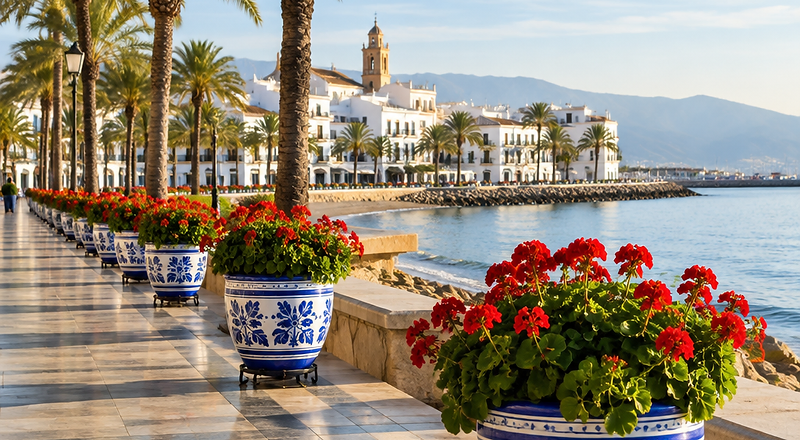
The case centres on a temporary municipal job that local reporting has long referred to as the plant pot job, because the position was connected with the upkeep of the flower displays that line the town's streets and have helped earn Estepona its reputation as the Garden of the Costa del Sol. Details that have emerged around the judge's decision indicate that the arrangement involved a short municipal contract lasting only about a month and a half. At the heart of the matter is the argument that the post was created and filled in a way that sidestepped the safeguards which normally govern public appointments at a Spanish town hall.
The charges
When the trial opens, the mayor will answer two accusations. The first is embezzlement, the unlawful use of public funds or resources for a purpose they were never intended for. The second is abuse of authority, the charge Spanish law knows as prevaricación, which applies when a public official knowingly takes a decision that is unjust in order to favour a particular person. Both are grave accusations for anyone who holds public office, and a conviction on either count can carry disqualification from holding public responsibilities in the future, a penalty that would in practice end a mayoral career at a stroke.
A long career in the spotlight
García Urbano is one of the longest-serving local leaders on the western Costa del Sol, and his years in office have coincided with an ambitious physical transformation of Estepona. Under his watch the town expanded its celebrated murals programme, extended the seafront promenade and polished the image of a municipality that markets itself with flowers, art and cleanliness. Supporters credit him with turning a once sleepy resort into one of the coast's most confident towns. Critics have long argued that such a long tenure concentrates too much power in one pair of hands, and the trial will now test whether that concentration crossed legal lines.
Political fallout
The ruling has sharpened existing calls for the Partido Popular, the party to which the mayor belongs, to suspend his membership while the case makes its way through court. That is a decision the party leadership will have to weigh carefully, because acting too slowly risks a reputational cost, while acting too quickly risks an injustice against one of its own. Municipal elections are distant, but Spain heads to the polls later this month, and every complication in a prominent local career will be noticed far beyond the borders of one town.
The presumption of innocence
It is worth stating clearly what this week's ruling is and what it is not. Being sent to trial is not a conviction. It means a judge considers there is enough evidence for the accusations to be examined properly in a public hearing, with the defence free to contest every claim and to present its own case. The mayor has consistently defended his conduct in the past, and he retains exactly the same presumption of innocence as any other citizen until a court says otherwise.
Why it matters for Estepona
The town is in the middle of a years-long effort to sell itself as a family-friendly, orderly destination, the kind of place where international visitors feel comfortable buying a second home or spending a whole season. A corruption trial involving the mayor himself is precisely the kind of story that travels beyond the local press and shapes how the town is talked about abroad. How the institution responds over the coming months, with transparency and calm, will matter almost as much as the verdict itself.
What happens next
The case will now be formally listed before the courts in Malaga, and the proceedings are expected to draw considerable attention from the regional and national media. No trial date has been confirmed, and these processes often take months to reach a hearing. In the meantime, day-to-day government in Estepona continues, budgets must still be passed and services still have to run. For residents, the most sensible approach is to follow the court record itself rather than the noise around it, and to remember that the final word belongs to a judge, not to headlines.
Related news


Torrox Christmas Lights: Two Million Bulbs Light the Coast
Torrox and El Morche have switched on more than two million Christmas lights along twenty kilometres of streets, one of the earliest festive displays on the Costa del Sol.


Nerja Cave Festival Returns in 2027 After Legal Deadlock
The Nerja Cave Festival returns in 2027 after a two-year legal deadlock, with Spain's contract appeals tribunal clearing up to twelve outdoor shows at the cave.


Sotogrande Schools Reopen After Storm Charles Shutdown
Schools in Sotogrande and across the Campo de Gibraltar are back in class after Storm Charles suspended in-person teaching on Wednesday. What happened, and how families can be ready for the next orange alert.
Free Guide: Buying Property in Spain 2026
A step-by-step guide for international buyers — from NIE to the notary.
We'll send you the guide link by email too. No spam — your details stay with Marbella New Homes.