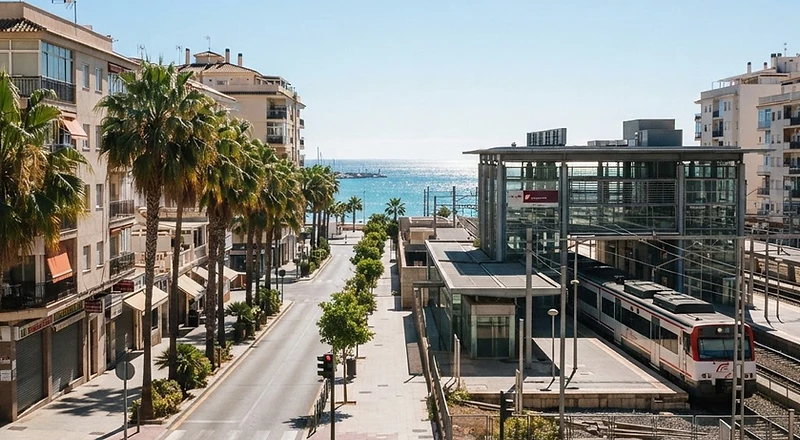
Fuengirola-Marbella Coastal Train Link: Latest Project News
Regional transport discussions place the long-sought Fuengirola to Marbella rail extension at the top of national coastal infrastructure priorities.
The Overdue Western Extension
Government transport assessors have formally classified the Fuengirola to Marbella rail extension as both technically feasible and an urgent infrastructure priority, offering a first real glimpse of a structural fix for the gridlock that chokes the A-7 coastal highway every summer. It is a shift campaigners and local mayors have pushed for over many years, and the timing matters: traffic volumes along the western Costa del Sol have been setting records season after season, with secondary routes through Mijas Costa and Calahonda seizing up during the morning commute long before the main holiday crush even begins.
The Cercanías C-1 line has run between Malaga city centre, the airport and Fuengirola since 1975, moving tens of thousands of commuters, resident expats and day-tripping tourists along the corridor daily. Yet the tracks stop dead at Fuengirola station. Marbella, one of the largest coastal cities anywhere in the European Union, remains without a single metre of passenger railway linking it to the regional network — an anomaly that has shaped commuting patterns, property prices and daily frustration for decades.
Technical commissions reviewing the wider coastal rail concept, which envisages an eventual line stretching as far as the Campo de Gibraltar, have now reaffirmed that the Fuengirola-to-Marbella stretch is the most viable and logical first phase. Rather than attempting the full western route in one go, planners are treating this section as the proof of concept: a manageable, high-demand segment that could demonstrate the case for further extension towards Estepona and beyond.
Housing and Commercial Real Estate Pressures
The rail corridor's importance goes well beyond unclogging the highway at rush hour. It is bound up directly with how the property market on this stretch of coast has developed over the past two decades. Soaring residential prices and a shortage of buildable land in central Marbella have pushed thousands of working professionals, along with foreign buyers seeking better value, out towards Fuengirola, Mijas Costa and the resorts further east. Without a rapid rail alternative, that population has had little choice but to rely on the A-7 or the parallel AP-7 toll road, adding time and cost to every daily journey.
Property analysts tracking the corridor say that confirmed station locations between Fuengirola and Marbella would likely trigger renewed capital appreciation in the towns and urbanisations sitting along the proposed route. Areas that have long been considered secondary, positioned between the two established markets rather than within either, stand to benefit most if a station appears on their doorstep. Investors reviewing opportunities through Marbella New Homes are watching the coastal transport studies closely, since rail connectivity has historically re-rated property values in the suburbs and intermediate zones it serves, not just in the flagship destinations at either end.
For homeowners already established in these areas, the practical upside would be twofold: shorter, more predictable commutes into Marbella for work, and a broader pool of buyers and tenants once a station becomes a realistic prospect rather than a talking point. For visitors and second-home owners, a working rail link would also mean an alternative to hiring a car or sitting in queues on the coastal road during peak season.
The Road Ahead for Planning Studies
Political leaders and business federations across the province have welcomed the project's new priority designation, but residents along the coast are, by now, understandably cautious about timelines. Several technical phases still need to be completed before any track can be laid. These include detailed environmental reviews of a corridor that runs through densely urbanised hillside terrain, engineering studies into subterranean boring where the route cannot run at surface level, and — perhaps most decisive of all — confirmation of funding allocations from national and regional budgets.
None of that happens quickly, and nobody involved in the project is promising otherwise. What has changed is that the Fuengirola-Marbella section now sits at the top of the national transport dossier rather than languishing as a long-term aspiration. Local councils along the western coast say they intend to keep it there, pressing for the studies to move from paper to spade-ready plans as swiftly as the bureaucracy allows.
Related news


Fuengirola Opens 2026 Feria del Rosario with Major Music Lineup
Fuengirola's celebrated autumn fair gets underway today at the town's Recinto Ferial with horse parades, casetas and concerts by Marta Sánchez and David Bustamante.


Fuengirola Prepares Feria del Rosario as Costa del Sol Enters Autumn Fiestas
Fuengirola readies its historic fairgrounds and town centre for the Feria del Rosario, highlighting equestrian displays, flamenco, and regional cultural celebrations.


Costa del Sol Arts Societies Launch Ambitious Cultural Season Across Coast
Expats across Fuengirola, Nerja and Gibraltar prepare for a vibrant autumn calendar spanning art history, musical theatre and architectural wonders.