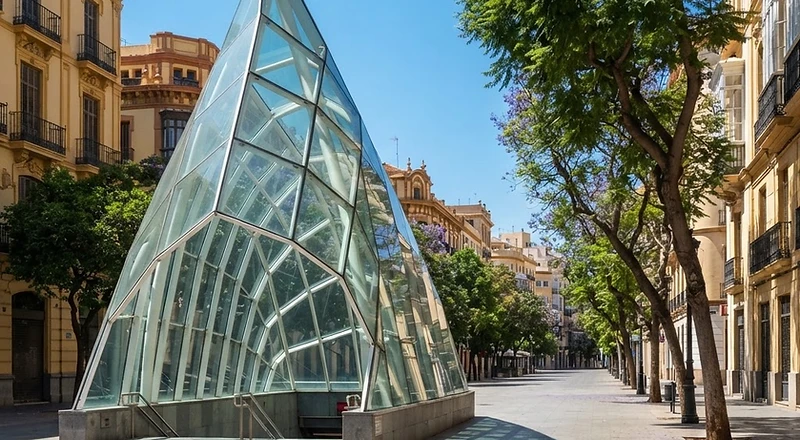
Málaga Transit Hits Record Surge as Passenger Journeys Approach 50 Million
Rapid urban bus and metro expansion pushes Málaga past Madrid and Seville in public transport patronage growth across 2026.
Málaga's Turnstiles Are Working Overtime
Something has shifted in how people move around Málaga city. Newly released regional transit figures confirm that the Málaga public transport network is on course to surpass 50 million total passenger trips before the close of 2026, a milestone that would have seemed unlikely even five years ago. The pace of growth has officially outstripped both Seville and Madrid, and it points to a genuine change in habits among coastal workers, students and visitors who once defaulted to the car.
For anyone living along the Costa del Sol, the numbers matter beyond city limits. A busier, better-funded network in the provincial capital tends to pull investment and service improvements along the coast with it, which is exactly what seems to be happening now.
Explosive Growth Across Metro and Urban Buses
Official counts show passenger journeys across the urban bus operator EMT and the expanding Málaga Metro recorded double-digit annual gains during the third quarter. While Madrid and Barcelona logged steady single-digit upticks, Málaga posted a surge exceeding 18 per cent year-on-year, a gap too wide to put down to coincidence. Transport analysts cite a handful of overlapping pressures: the sustained discount on multi-journey passes, stubbornly high petrol prices, and relentless congestion along the coastal A-7 dual carriageway, which continues to throttle peak-hour traffic into and out of the city.
The underground railway's extension into the historic centre via the Atarazanas station has now completed its second full year of integrated operations, and the effect on daily life is becoming clearer with each set of figures. By linking dense western suburbs such as Teatinos and Carretera de Cádiz directly to the Alameda Principal, the metro has altered how thousands of residents plan their mornings. Suburban commuters who once sat in traffic now reach the city centre in under fifteen minutes, a change that has quietly reshaped property interest in those western districts too, as buyers increasingly factor metro access into their decisions.
Shifting Mobility Along the Coastal Corridor
The knock-on effect is travelling west. Intercity bus corridors connecting Torremolinos, Benalmádena and Fuengirola are absorbing higher commuter volumes than at any point in the past decade, a direct consequence of a provincial hub that is expanding faster than its infrastructure was originally designed for. The steady arrival of international remote workers, combined with heavy flight traffic through Málaga-Costa del Sol Airport, has placed real strain on conventional road links. Authorities are responding by prioritising shared transit solutions rather than simply widening roads, a shift in policy thinking as much as in practice.
Regional transport planners are reviewing operational frequencies on primary feeder routes serving these towns. Weekend timetables and night-bus schedules have already been reinforced along key residential avenues, a practical response to the hospitality and service sector shift patterns that dominate coastal employment. Meanwhile, ticketing integration between municipal bus routes and suburban rail systems remains under active development by the Junta de Andalucía, with officials signalling that a unified fare system would further ease the switch away from private cars.
Modern Fleet Upgrades and Future Line Expansions
To keep pace with demand without sacrificing reliability, municipal operators have accelerated fleet electrification. Dozens of new high-capacity zero-emission buses have entered service across coastal routes in recent months, cutting street-level exhaust pollution and making the sweltering summer commute noticeably more bearable for passengers.
Longer-term, technical planning for extending the metro network towards the Civil Hospital and the northern districts is moving through detailed engineering reviews, though a firm construction timeline has yet to be confirmed. For residents navigating daily life in and around the city, public transport has moved from being an occasional alternative to something closer to essential infrastructure. The figures suggest that when services are fast, clean and reasonably priced, Andalusian commuters are willing to leave the car at home — and increasingly are doing exactly that.
For those weighing up where to live along the coast with transport links in mind, specialists such as Marbella New Homes report growing buyer interest in areas with direct bus or rail access to Málaga, a trend that looks set to continue as the network keeps expanding.
Related news


Malaga industrial estates: businesses demand road upgrades
Malaga industrial estates call on local authorities for urgent road infrastructure upgrades and firm timetables as Costco opening threatens gridlock.


Malaga housing deficit: Savills warns 30,000 homes short
Malaga housing deficit worsens as Savills report warns 30,000 planned homes fall short of demand, with only 3,000 units expected within five years.


Málaga public transport hits 50 million rides in 2026
Málaga public transport recorded nearly 50 million journeys across city buses and the metro during the first eight months of 2026, leading Spanish transit growth.
Free Guide: Buying Property in Spain 2026
A step-by-step guide for international buyers — from NIE to the notary.
We'll send you the guide link by email too. No spam — your details stay with Marbella New Homes.