
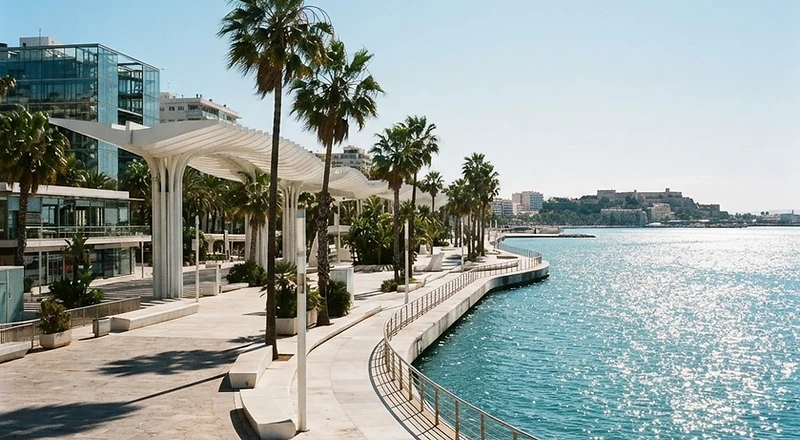
Málaga Waterfront Expands with New Residential Towers
The transformation of western Málaga gathers pace as landmark residential developments redefine the urban coastline.
A Skyline in Motion
Drive along the coastal road out of Málaga city towards the west and the change is impossible to miss. Cranes now dominate stretches of shoreline that, a decade ago, held little more than disused warehouses and scrubby wasteland. What was once treated primarily as a gateway city — somewhere travellers passed through en route to Marbella, Estepona or Fuengirola — has quietly become a residential destination that buyers are choosing on its own merits.
The shift has been building for years, driven by Málaga's growing reputation as a tech and cultural hub, but the physical evidence is only now becoming visible in concrete and glass. Foundation works and tower cranes along the western coastline are the clearest sign yet that the city's skyline is being redrawn.
Where the Building Is Happening
Much of the current activity is concentrated around La Térmica, a stretch of coastline with a genuinely industrial past that is now being repurposed for high-rise living, and along beachfront promenades where old port installations are giving way to residential blocks. These are not small infill projects. They form part of a broader corridor of development that runs towards the western edge of the city, linking several schemes into what planners hope will become a continuous, walkable seafront district.
The Sierra Blanca Tower has become something of a reference point for the standard now being pitched to buyers. Amenities such as concierge services, open-plan layouts and sustainability credentials were, until recently, associated almost exclusively with Marbella's Golden Mile. Their arrival on Málaga's own coastline marks a change in how the city is positioning itself — not as a budget alternative to the glamour resorts further along the coast, but as a comparable luxury market with its own identity.
Who Is Buying, and Why
Demand is coming from two overlapping groups. On one side are international professionals relocating for work, many linked to Málaga's expanding technology park and the wider cluster of firms that has grown up around it. On the other are private investors, both domestic and foreign, drawn by sea views, rental potential and the city's improving cultural and gastronomic offer. Both groups are competing for the same limited stock of seafront and elevated apartments, which is pushing up prices in the newest developments and adding pressure to an already tight market.
For existing residents, this matters in practical terms. Areas that were previously overlooked in terms of infrastructure spending are now seeing renewed investment, but rising demand for waterfront property also tends to filter through into wider rental and purchase costs across the city. Homeowners in nearby neighbourhoods may see values rise; those looking to buy locally may find themselves priced out of areas they once considered affordable.
Planning for More Than Just Housing
Málaga's city planners are keen to stress that this is not simply a case of towers going up wherever land becomes available. Approvals for the new residential schemes have been tied to commitments on green public space, pedestrian connections and modernised coastal avenues, with commercial units and leisure facilities built into the ground floors of many towers. The stated aim is to avoid creating isolated dormitory blocks and instead produce neighbourhoods that function day-to-day, with shops, cafés and services within walking distance rather than a car journey away.
Whether that ambition is fully realised will depend on how consistently those commitments are enforced as individual projects are completed, something local residents' associations are likely to watch closely as construction progresses.
What Comes Next
Completion dates for the various structural phases are staggered, with much of the current pipeline expected to finish between late 2026 and 2028. That timeline gives buyers and investors a reasonably clear window for when new stock will actually reach the market, rather than remain a construction site view from a neighbouring balcony.
Property analysts tracking the Andalusian coast expect Málaga's western seafront to remain one of the more active investment zones in the region over that period, as the combination of urban regeneration, transport links and lifestyle appeal continues to draw both residents and capital away from the more established resort towns and into the provincial capital itself.
Related news


Hollywood Stars Gather in Málaga as Major Comic Showcase Continues
Anthony Mackie, David Harbour and Winston Duke have touched down on the Costa del Sol for major international film panels and fan events.

Málaga Airport Commences New Terminal Infrastructure Works
Construction crews initiate extensive foundational infrastructure upgrades across Málaga-Costa del Sol Airport ahead of peak winter schedules.


Hollywood Stars Touch Down in Málaga for Global Pop Culture Convention
Marvel stars Anthony Mackie, David Harbour and Winston Duke draw international crowds to Málaga for a blockbuster autumn entertainment showcase.