Manilva Launches Historic Wine Heritage Restoration
A new municipal initiative preserves Manilva's centuries-old Moscatel vineyards and historic sea-facing lagares against commercial development.
A Vote to Save the Hillside Vineyards
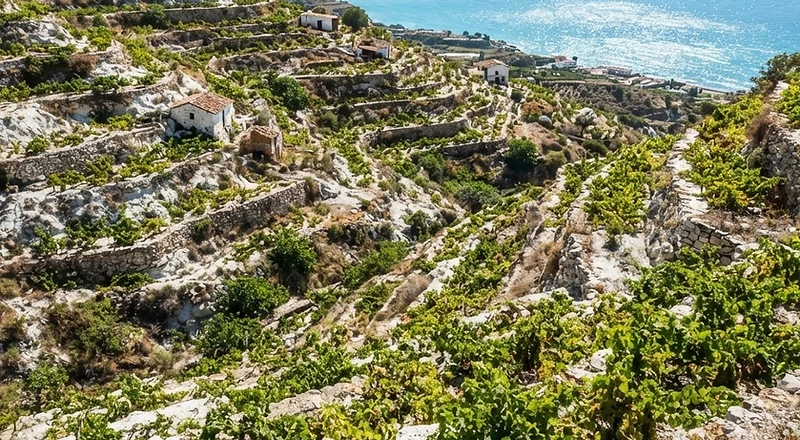
Manilva's municipal council has approved a conservation charter designed to protect one of the Costa del Sol's last working agricultural landscapes: the sloping Moscatel de Alejandría vineyards that run down towards the sea. The decision, passed unanimously, gives formal protection to traditional wine-growing plots that have come under sustained pressure from property development over the past two decades, and it sets up a restoration fund aimed squarely at the town's crumbling lagares — the old stone pressing houses scattered across the hillsides.
Under the new planning rules, several dozen of these historic structures will be eligible for structural preservation grants, many of which have sat exposed to the elements for years, slowly losing roofs, beams and the pressing stones that once turned local grapes into wine and raisins. The charter reclassifies the surrounding vineyard terrain as protected rural zoning, a move that effectively takes it off the table for the kind of urbanisation that has reshaped so much of the coastline between Marbella and Estepona.
Why Manilva's Vineyards Matter
What makes Manilva unusual, even within Andalucía, is the geography: hillside vineyards that run almost directly to the Mediterranean shoreline, a configuration found in very few places left in southern Europe. The vines themselves carry a long history, with cultivation in the area tracing back to Roman and Moorish periods. Alongside sweet wine production, Manilva has long been known for its table grapes, traditionally sun-dried on raised wooden racks called paseros — a practice still visible on some of the older farms dotted around the municipality.
The pressure on this land has been building for years. As property values along the coast climbed, agricultural parcels close to the town centre became increasingly attractive for residential development, leaving smallholders and traditional growers squeezed between rising land prices and the practical difficulty of keeping small-scale viticulture economically viable. The council's charter is a direct response to that squeeze, aiming to make it financially sensible for landowners to keep farming rather than sell up.
What Changes for Landowners and Residents
For the families who own these plots, the practical shift is significant. Landowners who commit to maintaining dry-stone terracing and organic cultivation methods can now apply for direct municipal subsidies to cover maintenance costs — work that is labour-intensive and, until now, largely unsupported. The hope among councillors is that this will encourage a revival of artisan wine production rather than its slow disappearance, while also protecting the terraced landscape that gives this stretch of coastline its particular character.
For residents and expats living in and around Manilva, the charter means the rural backdrop to the town — the terraced hillsides visible from much of the urban centre and from the coast road — is now shielded from the kind of large-scale building projects seen elsewhere on the Costa del Sol. For prospective buyers and those already settled in the area, it also signals that the council intends to preserve a distinct rural identity alongside the town's more obviously tourist-facing coastline.
New Routes for Visitors
The charter isn't purely about restriction and subsidy — it also opens the door to controlled tourism. Central to this is the signposting of the Ruta de los Lagares, a hiking circuit that will connect the village of Manilva with viewpoints overlooking the coast. The route is designed to link the historic stone presses with working wineries along the way, and will include English-language information boards explaining the traditional grape harvest and the history of local wine production — a nod to the sizeable international community living in and visiting the area.
For walkers and visitors with an interest in the region's agricultural past, this gives Manilva something distinct from the beach-and-marina tourism that dominates much of the coast. It also ties the vineyard protections directly into the local economy, giving landowners a reason to keep their terraces maintained and visible rather than simply fenced off.
A Model for Other Coastal Towns
Heritage groups and community organisations have welcomed the council's decision, framing it as a template other coastal municipalities might follow as development pressure continues along the Costa del Sol. With the restoration fund now in place and protected zoning formally adopted, the next practical steps will involve landowners applying for the available grants and subsidies, and the physical signposting of the Ruta de los Lagares getting under way — work that will determine how quickly Manilva's vineyard heritage becomes a visible, walkable part of the town's identity rather than a fading backdrop to it.
Related news

Manilva Hotel Standoff Ends Safely Following Emergency Intervention
Guardia Civil officers peacefully resolved a tense hotel barricade incident in Manilva after a tourist locked himself in a room with a young child.

Taylor Wimpey Bets €63 Million on 153-Home Manilva Scheme
Major developer Taylor Wimpey commits €63 million to build 153 residential homes in Manilva as buyer demand ripples westward along the Costa del Sol.

Manilva’s CIVIMA Theatre Hosts Autumn Charity Concert
The Love to Sing choir will perform this Friday to raise funds for local children ahead of the festive season.
Free Guide: Buying Property in Spain 2026
A step-by-step guide for international buyers — from NIE to the notary.
We'll send you the guide link by email too. No spam — your details stay with Marbella New Homes.