Manilva urban planning forum opens eleventh edition today
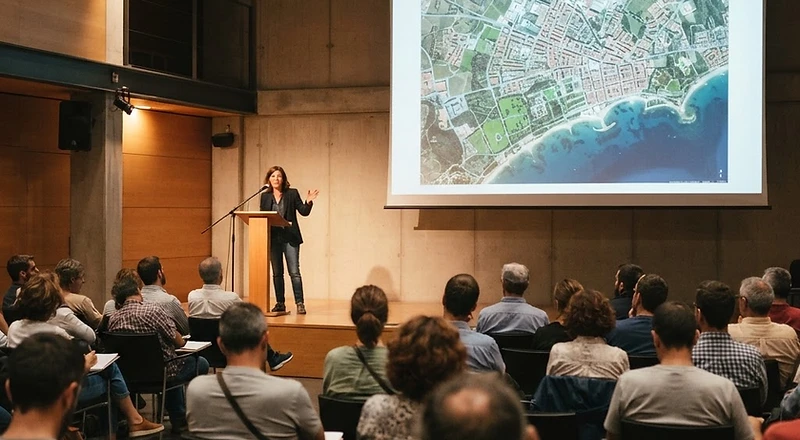
The eleventh Urbanism, Territory and Environment conference open today at Villa Matilde in Manilva, putting growth, land use and the second school campaign on the table.
The eleventh edition of the Urbanism, Territory and Environment conference days opens today at Villa Matilde, turning Manilva's cultural centre into the venue where the future shape of one of the western Costa del Sol's fastest changing municipalities will be argued over by the people who plan it.
The event, organised by the delegation responsible for urban planning and the environment, brings together technicians, local officials and residents for a day of sessions on how growth, land use and environmental protection can share the same small stretch of coast without cancelling each other out.
That question could hardly have a better setting than Manilva. The municipality, which sits at the far western end of the Malaga province bordering Cadiz, packs into some thirty square kilometres almost every pressure that defines the modern Costa del Sol: a working village on the hill, a fishing heritage on the shore at San Luis de Sabinillas, the marina quarter at Puerto de la Duquesa, vineyards of moscatel grapes that survive between urban estates, and a rolling construction programme of apartments for the international buyers who have rediscovered this end of the coast.
Growth is no longer an abstraction here. The municipality has spent the past two years negotiating where new housing can go, which green corridors must stay untouched and how public services, from schools to drainage, are supposed to keep pace with the population that moves in behind the cranes. A second secondary school has become one of the central demands of local parents' associations, with meetings scheduled this very week between the families' representatives and the education authorities, and it is precisely the kind of domino effect that urban planning conferences exist to discuss: approve the homes and the classrooms, the sewers and the bus routes follow, or do not follow, depending on whether anyone planned the sequence.
The conference days, which have reached their eleventh edition, have a reputation as one of the more serious fixtures on the local calendar, a place where the general plan of urban development is discussed with maps open rather than slogans. Sessions traditionally cover the mechanics of Spanish planning law, the coastal rules that limit what can be built within the first line of the shore, water management, and the balance between protected agricultural land and residential demand.
For residents, the practical value of a day like today is direct. Planning documents are impenetrable when read alone, and public participation periods are short. A forum where officials walk through the reasoning behind a zoning change, and answer questions in a room rather than through a formal registry, is one of the few moments in the process where a resident without a law degree can intervene before the plan is fixed rather than after.
It is also a moment of calibration for a town that knows what rapid growth costs. Down the coast, its neighbours have shown both outcomes: resorts that rose without enough services and now live with the consequences, and towns that grew more slowly and kept the character that made buyers want to arrive in the first place. Manilva sits at the point where that choice gets made in this decade, not in some abstract future.
The venue itself is part of the message. Villa Matilde, the cultural centre at the heart of village life, stands a few streets from the vineyards that once defined the local economy, and hosting a planning summit there is a quiet statement that the future is being decided in Manilva, for Manilva, within sight of the fields it will either protect or consume.
The invitation is open, and the timing is deliberate: the event lands in a week when the school campaign, the construction pipeline and the autumn municipal agenda are all live at once. Anyone in the municipality who owns a home, rents one, works in construction or simply walks a dog along the Paseo Maritimo has a stake in what gets said at Villa Matilde today. The most useful thing an ordinary resident can take away is not a position on any single plot of land, but a map of how the decisions get made, and where the doors are for the next time a plan arrives that will change the view from their window.
Related news

Golden Visa Spain 2026: Status and the Alternatives Now
Golden Visa Spain closed on 3 April 2025. What existing holders keep, and the 2026 alternatives: the non-lucrative visa at 28,800 euros a year and the digital nomad visa.


Empadronamiento Spain: How to Register on the Costa del Sol
Empadronamiento on the Costa del Sol: the documents you need, how to book appointments in Marbella, Fuengirola, Mijas and Estepona, and the two-year renewal rule.


Non-Resident Tax Spain: Modelo 210 Deadlines for 2027
Non-resident tax in Spain explained: how Modelo 210 works for Costa del Sol property owners, who pays 19 or 24 percent, and what Orden HAC/623/2026 changed about the deadlines for 2026 and 2027.
Free Guide: Buying Property in Spain 2026
A step-by-step guide for international buyers — from NIE to the notary.
We'll send you the guide link by email too. No spam — your details stay with Marbella New Homes.