Marbella Turns to Helicopter Patrols After Wave of Shootings
Plan Costa del Sol deploys police helicopters with searchlights over Marbella and Malaga after a wave of shootings, as security becomes an election issue.
Rotors Over the Urbanizations
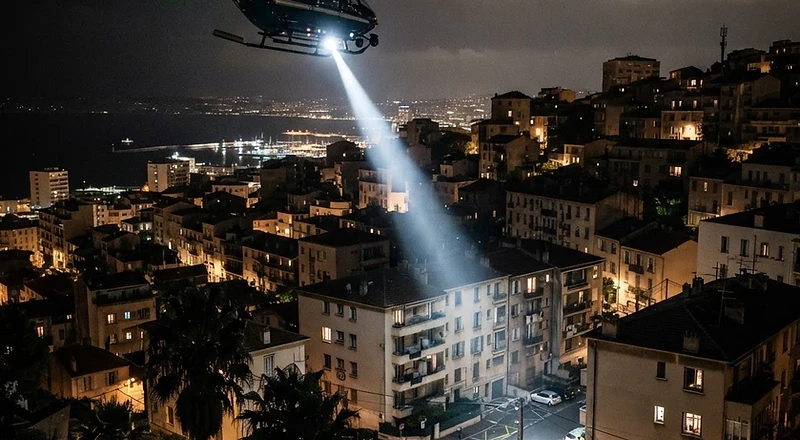
For several nights running, residents across Marbella and Malaga have watched police helicopters sweep low over rooftops, their searchlights tracing the outlines of villas, apartment blocks and shopping parades long after dark. It is an unusual sight for a coastline more accustomed to the drone of beach bars than the thud of rotor blades, and it marks the most visible step yet in a policing operation that has been building quietly for weeks.
The aerial patrols form part of Plan Costa del Sol, a joint initiative between the National Police and the Guardia Civil set up to coordinate the response to a string of shootings that has rattled both towns in recent months. Officers on the ground have already been reinforced in known hotspots; the helicopters add a new layer, scanning urbanisations, industrial estates and commercial zones once the sun goes down.
A Mixed Reaction on the Street
Opinion among those living under the flight paths is split. Some residents say they are relieved to see any extra resource thrown at the problem, and that the nightly presence — however noisy — has been impossible to miss. For them, a helicopter overhead is proof that someone is taking the shootings seriously.
Others feel differently. The combination of engine noise and sweeping searchlights, they say, turns an ordinary evening into something closer to a stakeout, and serves as a constant reminder that the underlying problem has not gone away. Several residents in affected neighbourhoods have described lying awake listening to the rotors circle back again and again, unsure whether to feel reassured or unsettled.
That tension — between visible security and the anxiety it can itself generate — is likely to shape how the operation is judged in the weeks ahead, regardless of the eventual arrest figures.
Politics Moves In
Security on the Costa del Sol has inevitably become a political football. Antonio Sevilla, Vox's provincial leader, has used the shootings to attack national Interior Minister Fernando Grande-Marlaska directly, arguing that neither Marbella nor Malaga can honestly be called safe cities under the current government's approach to policing.
The timing is pointed. With the general election set for November 29, local crime figures are certain to be cited by every party canvassing the coast, and the helicopters overhead give the debate a very literal soundtrack. Expect candidates from across the spectrum to reference Plan Costa del Sol on the campaign trail, either as evidence of a government finally acting, or as proof that things had to get this bad before it did.
The Official Line
Regional and national authorities insist the aerial deployment is targeted rather than blanket surveillance. Officials describe the helicopters as focused specifically on the networks believed responsible for the recent violence, not on residents going about their evenings, and stress that the measure is temporary — in place only until arrests bring the threat level down.
Commanders overseeing Plan Costa del Sol say arrests connected to the shootings have continued steadily through October, and that the helicopter patrols will stay airborne for as long as investigations remain active. No end date has been given, which suggests residents in Marbella and Malaga should expect the night-time flights to continue for at least the coming weeks.
Why It Matters Beyond Policing
Marbella's economy does not run on sunshine alone. The town's international reputation rests heavily on a sense of safety and calm, qualities that have underpinned decades of property investment and tourism. Hoteliers and estate agents are watching the headlines with more than passing interest, aware that perception can move markets as quickly as any interest rate change.
For homeowners, landlords and the wider expat community, the practical takeaway is straightforward for now: increased police visibility, both on the ground and overhead, is set to continue while the investigation runs its course. Anyone searching for property or planning a long stay on the coast in the coming months will likely find the subject raised in conversation, whether with neighbours, letting agents or at Marbella New Homes, where staff are used to fielding client questions about safety alongside the usual queries on square metres and sea views.
Whether the helicopters prove a short-term fix or the start of a longer-term shift in how the coast is policed will depend largely on what the ongoing arrests turn up — and how quickly.
Related news


Marbella police recruitment, 26 new officer posts approved
Marbella police recruitment takes a major step forward as the local council approves 26 new officer positions to reinforce municipal safety and public services.


DUCO Summit in Marbella: luxury travel leaders meet
DUCO Summit in Marbella gathers top international travel advisors and elite hospitality brands across Spain and Portugal for a major five-day tourism gathering.


Royals in Marbella: From King Fahd to Princess Diana
Royals in Marbella: King Fahd's Golden Mile palace and Princess Diana's 1994 Costa del Sol getaway, and what decades of royal guests mean for the property market.
Free Guide: Buying Property in Spain 2026
A step-by-step guide for international buyers — from NIE to the notary.
We'll send you the guide link by email too. No spam — your details stay with Marbella New Homes.