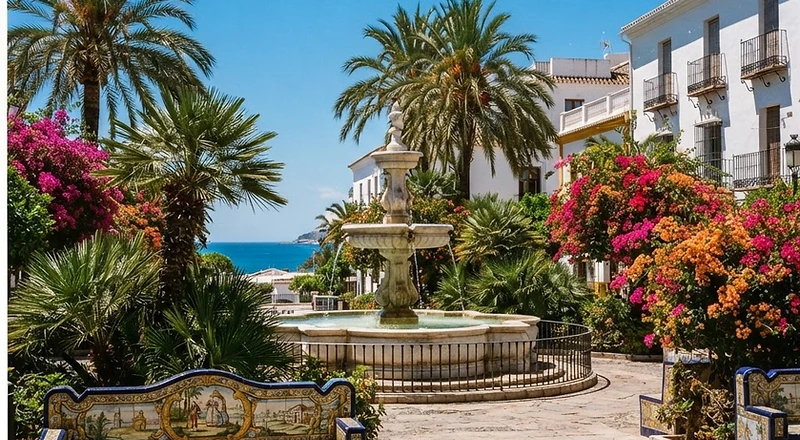
Marbella TodoDanza Festival Takes Over Historic Theatres and Plazas
Fourteen acclaimed dance troupes have arrived in Marbella as the 17th annual TodoDanza festival expands across city venues throughout October.
A Marbella Institution Reaches Its Seventeenth Year
The stages are set, the courtyards lit, and for the next six weeks Marbella's old town and theatre district belong to dancers. The 17th edition of Marbella TodoDanza is now underway, running until 6 November 2026, with fourteen professional dance companies from Spain and abroad taking part under this year's artistic theme, 'Poéticas del cuerpo' — a programme that treats the human body as a vessel for both historical memory and present-day expression.
Organised by the town hall's culture department, TodoDanza has grown from a modest annual showcase into one of the fixed points on the Costa del Sol's autumn cultural calendar. Seventeen years in, it now carries enough weight to draw touring companies willing to build new work specifically around Marbella's architecture, rather than simply dropping an existing production into a local venue.
Theatres, Courtyards and Open Streets
What sets this year's edition apart is the decision to spread performances across the town rather than keep everything under one roof. The Teatro Ciudad de Marbella remains the anchor venue for the larger, more dramatic mainstage works, giving touring companies a proper stage with full technical rigging and seating capacity for ticketed audiences.
For something closer to the skin, organisers have turned to the courtyard of the Museo del Grabado Español Contemporáneo in the historic quarter, where intimate experimental pieces and chamber choreography unfold within arm's reach of the audience. The museum itself, a repository of Spanish printmaking housed in a converted building in the old town, lends its stone walls and confined acoustics to performances that would lose their intensity in a conventional theatre.
Meanwhile, the marble-paved Paseo de la Alameda, one of Marbella's oldest public gardens, has been pressed into service for open-air exhibitions. These are designed deliberately to catch residents and tourists mid-stroll rather than wait for them to buy a ticket — dance as something you stumble across on an evening walk rather than something you plan an outing around.
Classical Technique Alongside Contemporary Risk
The programming itself resists easy categorisation. Neoclassical companies with formal training sit alongside physical theatre groups pushing into more experimental territory, and several of the touring Spanish ensembles have built pieces specifically to exploit the acoustics and sightlines of Marbella's historic spaces rather than adapting generic repertoire to fit. For a choreographer, a sixteenth-century courtyard behaves very differently from a black-box studio, and the festival's decision to commission site-specific work reflects a level of ambition beyond simply filling a schedule.
Alongside the evening performances, visiting choreographers are running masterclasses and panel discussions aimed at local arts students — a practical, hands-on element that gives younger dancers on the coast access to professional-level instruction they would otherwise have to travel to Málaga or Madrid to find.
Free Access and What It Means for Residents
The town hall's decision to make several showcase events entirely free, admitted on a first-come, first-served basis up to venue capacity, has clearly struck a chord locally. Interest has picked up noticeably since the announcement, and it fits a broader strategy the council has pursued in recent years: building a performing arts calendar substantial enough to stand alongside Marbella's established reputation for beach clubs and high-end leisure.
For the town's large resident expat community, many of whom settled on the coast precisely because of its lifestyle offering rather than its cultural infrastructure, TodoDanza represents one of the more accessible entry points into Spanish contemporary arts — no language barrier, modest or zero cost, and venues within easy walking distance of the centre.
Tickets, Timings and Practical Details
Most performances run Thursday through Sunday evenings across the six-week programme. For the ticketed indoor productions at the Teatro Ciudad de Marbella, bookings and full schedules are handled through the town's cultural office at Plaza de Altamirano. Prices are kept deliberately low, generally between €10 and €20, in keeping with the council's stated aim of keeping the festival accessible rather than treating it as a prestige event for a narrow audience.
With performances continuing through to 6 November, there's still ample time for residents and visitors to catch several of the fourteen participating companies before the festival's run concludes for another year.
Related news


Kylian Mbappé Takes Marbella Break Following Autumn International Duty
Real Madrid superstar Kylian Mbappé spends a recovery break on Marbella's Golden Mile, combining coastal downtime with private training sessions.

Marbella Clears Way for Spain's First Waldorf Astoria Resort
Marbella Town Hall has approved planning milestones for Spain's inaugural Waldorf Astoria luxury hotel and private residences.

International Padel Stars Gather as Square One Marbella Weekender Opens Championship Courts
Elite amateur competitors and touring padel professionals arrive in Marbella this weekend as the Square One tournament brings high-level court action to the coast.