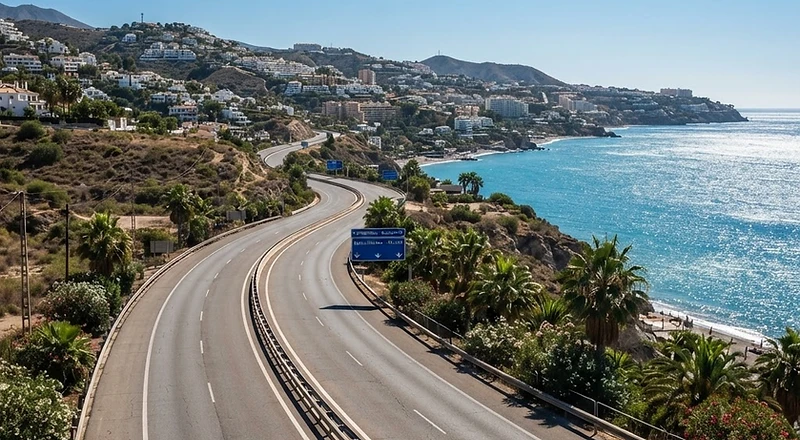
Mayors Demand Immediate Solutions for Chronic A-7 Motorway Gridlock
Municipal leaders across the Costa del Sol unite to demand urgent central government action on bottlenecked coastal motorways and rail links.
Drivers on the A-7 already know the drill: brake lights from Fuengirola to Torremolinos most weekday mornings, and again come evening, as commuters, delivery lorries and tourist traffic fight for the same stretch of tarmac. Now the mayors who govern that stretch of coast have decided enough is enough, writing jointly to national authorities to demand urgent action on both the road itself and the rail alternative that was supposed to take pressure off it years ago.
Unrelenting Bottlenecks Cripple Daily Commuters
The worst of it unfolds between Fuengirola, Mijas and Torremolinos, a corridor where school runs, freight deliveries and office commutes converge on a motorway never built for this volume of traffic. Regional business associations have begun quantifying the cost, warning that the daily tailbacks are no longer a mere inconvenience but a drag on productivity, delaying goods, workers and services across the western province.
Local leaders have put a three-part plan to the Ministry of Transport. First, widen the notorious bottleneck sections of the A-7 to give the road a continuous third lane rather than the current stop-start arrangement. Second, suspend or subsidise tolls on the parallel AP-7 motorway during peak hours, a move designed to tempt freight operators and through-traffic off the free coastal road and onto the toll route inland. Third, and perhaps most significant long-term, they want the Ministry to commit to firm dates for extending the Cercanías commuter rail line west towards Marbella and Estepona, towns that currently have no rail connection at all despite being among the most populous on the coast.
Upcoming Rail Upgrades Add Immediate Pressure
The timing adds urgency to the mayors' demands. Sections of the existing Málaga–Torremolinos railway line are due to close temporarily for technical overhaul work in early 2027, part of scheduled modernisation of ageing track and signalling. Useful as that upgrade may prove in the long run, local authorities warn it risks backfiring in the short term: thousands of commuters who currently rely on the train to avoid the A-7 will have nowhere to go but back onto the road, at precisely the moment the motorway can least absorb them.
Councils along the coast are asking, reasonably enough, what contingency exists for those weeks or months of disruption. Replacement bus services, staggered works, or temporary toll relief on the AP-7 have all been floated informally, but nothing has yet been confirmed by the ministry.
A Coastline That Has Outgrown Its Roads
Mayoral representatives point to a deeper structural problem behind the daily jams. The Costa del Sol's population has swollen for two decades, fuelled by foreign residents settling permanently, remote workers drawn by the climate and connectivity, and a service sector that keeps expanding to meet tourist demand. Much of the road and rail network serving these towns was designed for a fraction of today's traffic, and successive governments have patched rather than rebuilt it.
For homeowners, renters and anyone weighing up a move to the coast, the practical implications are immediate: a commute from Estepona or Marbella into Málaga that should take forty minutes can now stretch well beyond an hour at peak times, and that calculus matters to buyers choosing between inland and coastal properties. Agencies such as Marbella New Homes report that transport links increasingly factor into where clients choose to settle, particularly those weighing the trade-off between coastal lifestyle and daily commuting reality.
Local leaders argue that the tax revenue generated by coastal tourism and the property market, both significant contributors to Andalusia's economy, ought to flow back into the infrastructure that sustains them. Their case is straightforward: if the region keeps generating this much economic activity, the roads and railways carrying people to work deserve investment to match.
Calls for Bipartisan Coastal Transport Table
To force the issue, municipal spokespeople are pushing for an emergency technical summit bringing together planners from the central ministry, the Andalusian regional government and the affected town councils. Their argument is that road resurfacing and isolated fixes have run their course as a strategy, and that only a coordinated master plan, covering both the A-7 corridor and the rail network feeding it, will prevent the kind of gridlock residents now face every morning from becoming permanent. Whether Madrid responds with the timetable the mayors want remains, for now, an open question.
Related news


Álora Celebrates Historic Culinary Legacy with Annual Perotas Soup Festivities
Álora marks the historic tradition of its agricultural harvest dish as culinary lovers gather in the Guadalhorce Valley for the iconic Perotas Soup Day.


Yunquera Fair Launches Autumn Festivities with Deep Mountain Cultural Traditions
Yunquera enters its autumn celebrations this week, drawing visitors into the dramatic Sierra de las Nieves with folk music, religious processions and mountain hospitality.


Costa del Sol Hospitality Leaders Contest Rigid Coastal Environmental Rules
Beach restaurant operators and chiringuito federations across the coast launch talks with authorities to modernise restrictive coastal concession regulations.