
Málaga Airport Commences New Terminal Infrastructure Works
Construction crews initiate extensive foundational infrastructure upgrades across Málaga-Costa del Sol Airport ahead of peak winter schedules.
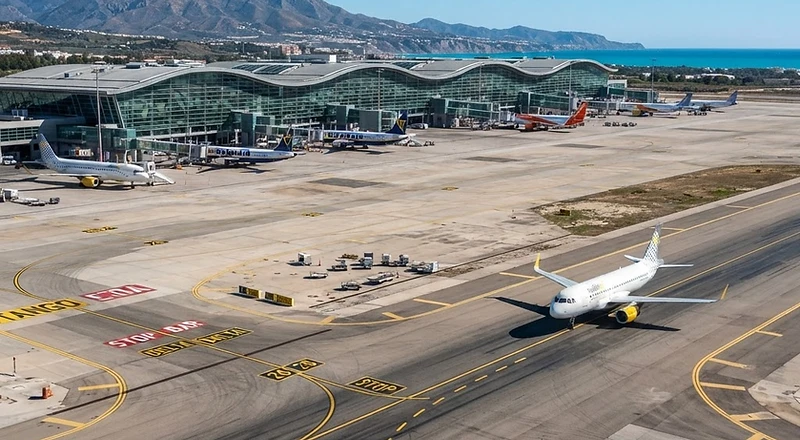
Diggers and cranes have moved onto the southern perimeter of Málaga-Costa del Sol Airport this week, marking the start of a long-anticipated infrastructure programme. Airport authority AENA has begun groundworks on taxiway and terminal utility upgrades designed to ease pressure on one of Spain's busiest aviation hubs after another summer of record passenger numbers.
Expanding the Gateway to Andalusia
Contractors have fenced off land next to the southern aircraft parking aprons, where crews are laying upgraded underground power conduits, reinforced jet-fuel delivery lines and new drainage basins built to cope with heavy autumn downpours. The works represent the first physical phase of a wider capacity plan that has been under discussion for some time, as the airport grapples with traffic levels that regularly exceeded 500 flight movements in a single 24-hour period over the peak season.
The airport, which serves as the principal air gateway for the entire Costa del Sol, operates on a dual-runway layout that has come under increasing strain as tourism and residential demand along the coast continue to grow. By widening taxiway exit junctions, air traffic controllers will be able to clear landing aircraft off the main runway more quickly, trimming the seconds each plane spends taxiing and, cumulatively, reducing fuel burn and emissions across the surrounding valley. For an airport handling tens of millions of passengers annually, even small efficiency gains at this stage of the flight cycle add up over a full year of operations.
Passenger Flow and Check-in Modernisation
Inside Terminal 3, the main passenger building used by most international arrivals, contractors are preparing to install next-generation 3D computed tomography scanners at the security screening points. The rollout will happen in stages over the coming months rather than all at once, reflecting the scale of retrofitting required across multiple lanes. Once operational, the new scanners will allow passengers to leave liquids and laptops inside their hand luggage, a change that should noticeably shorten queues during the busiest departure windows, particularly for the early morning rush of low-cost carriers heading to northern Europe.
Airport management has been at pains to stress that passengers should notice little disruption while the groundworks proceed. Heavy machinery has been restricted to airside corridors between 23:00 and 06:00, when flight schedules are at their quietest, meaning daytime operations should continue largely as normal while the engineering work takes shape overnight.
Driving Regional Economic Prosperity
The investment lands at a moment when coastal town halls and business groups have been pushing for stronger air links to match the pace of development along the coastline. Reliable, year-round scheduled services to London, Dublin, Frankfurt, Zurich and the Scandinavian capitals matter enormously to the foreign residents, second-home owners and relocating executives who treat Málaga as their point of entry to the region. For many, the ease of getting to and from the airport is as much a factor in choosing where to live as the property itself.
Estate agencies working with international buyers are watching the project closely. Specialists such as Marbella New Homes have long pointed to the strength of Málaga's flight network as one of the underlying reasons overseas buyers continue to commit to property along the western Costa del Sol, from Marbella to Estepona and beyond. An airport that can handle growing passenger volumes without long queues or delays reinforces the coast's appeal to buyers who may only visit their Spanish home a handful of times a year but need to know the journey will be straightforward when they do.
For now, residents and visitors should expect to see construction activity confined to the southern apron and overnight hours, with the security hall upgrades arriving gradually rather than overnight. The pace of the works suggests AENA is treating this as a multi-month undertaking rather than a quick fix, consistent with the scale of conduit, fuel line and drainage work already under way. If the taxiway and terminal improvements deliver as planned, the practical benefit for the hundreds of thousands of people who pass through the airport each month should be fewer delays on the tarmac and a faster walk through security — unglamorous changes, perhaps, but the kind that matter most to anyone catching an early flight home.
Related news


Hollywood Stars Gather in Málaga as Major Comic Showcase Continues
Anthony Mackie, David Harbour and Winston Duke have touched down on the Costa del Sol for major international film panels and fan events.


Hollywood Stars Touch Down in Málaga for Global Pop Culture Convention
Marvel stars Anthony Mackie, David Harbour and Winston Duke draw international crowds to Málaga for a blockbuster autumn entertainment showcase.


Málaga Airport Prepares €1.5 Billion Masterplan to Double Terminal Capacity
Spain's national airport operator outlines a multi-year €1.5 billion expansion for Málaga-Costa del Sol Airport as passenger traffic nears official saturation points.