Casares Advances White Village Heritage Restoration and Walking Network
Casares Town Hall begins extensive architectural preservation and historical path upgrades to showcase its medieval Moorish castle and authentic hill-village character.
Casares Advances White Village Heritage Restoration and Walking Network
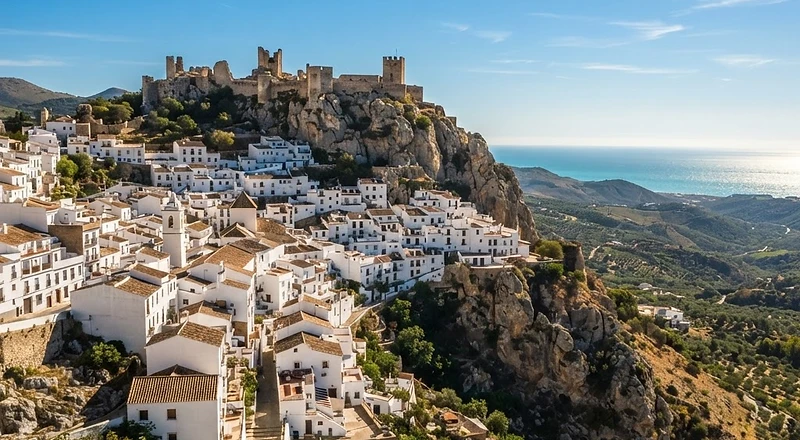
Scaffolding now lines sections of the Moorish fortress walls above Casares, where a restoration crew has begun the most significant conservation effort the village has seen in years. The works, which local authorities confirm are already under way, aim to shore up the cliffside settlement's oldest structures while making its famously steep streets easier to navigate on foot.
Perched on a rocky outcrop with views stretching to the Mediterranean, Casares has long been held up as one of the best-preserved examples of Andalusian white village architecture on the western Costa del Sol. The current project represents a direct investment in keeping that reputation intact, rather than letting centuries-old stonework quietly deteriorate under the weight of tourism, weather and time.
Preserving the Moorish Legacy
The restoration focuses on two main areas: the perimeter walls of the 12th-century Moorish fortress that still crowns the village, and the stone arches connecting the upper settlement to the historic town square. These arches have functioned as informal gateways for generations of residents moving between the castle quarter and the lower village, and their structural condition has reportedly been a concern for some time.
Masons and specialist restoration technicians are working with limestone mortars and materials sourced locally, matching the original construction techniques as closely as possible rather than relying on modern substitutes that could compromise the village's historic character. This approach is standard practice in heritage-protected zones across Andalusia, where cliff-edge buttresses have absorbed the force of coastal winds for hundreds of years and require periodic reinforcement rather than wholesale replacement.
Alongside the structural work, town planners are installing step-free pedestrian segments through parts of the old quarter and fitting low-impact LED lighting designed to highlight the architecture without the glare of conventional street lamps. Both measures address practical problems that residents and visitors have raised for years: the alleyways of Casares are narrow, steep and in places treacherous after dark, particularly for older residents or anyone with mobility difficulties. The improved lighting and surfacing should make the historic core considerably easier to use day-to-day, not just more attractive for a postcard photo.
Restricting vehicle access within the conservation zone is another strand of the plan. Cars squeezing through lanes built for mules and foot traffic have long been a source of friction in villages like Casares, and reducing that encroachment protects both the stonework and the pedestrian experience.
Boosting Inland Cultural Tourism
The timing reflects a broader shift in how people are exploring this stretch of coast. While the beaches of Estepona and Marbella continue to draw the summer crowds, inland white villages are seeing a steady rise in visitors looking for something beyond sun loungers: artisan food producers, walking routes through olive groves and pine forest, and architecture that predates the resort developments by centuries.
Casares sits roughly 11 kilometres from the coast and has built a reputation as one of the more accessible of these villages, thanks partly to its proximity to Estepona and the N-340 corridor. For homeowners and expats based along the coast, the restored walking network offers a practical reason to venture inland on a weekend rather than simply passing through on the way to Ronda or the Serranía de Ronda.
What the Works Mean in Practice
For residents, the most immediate change will likely be improved accessibility through parts of the old town that have previously been difficult to navigate, particularly for older people and families with pushchairs. Local businesses in the historic quarter, including the handful of bars and craft shops that depend on foot traffic, stand to benefit from calmer, car-free lanes and better evening lighting that extends the hours visitors are willing to linger.
For anyone considering property in the area, sustained investment in heritage protection tends to support long-term value in historic centres, where buyers are often drawn as much by authenticity and setting as by square footage. Prospective buyers exploring options around Casares and the wider Costa del Sol can find listings and local guidance through Marbella New Homes.
No completion date has been made public, and the council has not detailed the total cost of the works. Given the scale of the conservation zone involved, the project is likely to proceed in phases, with the fortress walls and arch restoration taking priority before lighting and surfacing work extends further through the village.
Related news


Casares cancels Halloween events as Spain mourns train crash
Casares and neighbouring Estepona cancelled their Halloween programmes for national mourning after the Urda train disaster, while Manilva and Marbella moved theirs to Sunday.


Hugh Grant Enjoys Autumn Respite Exploring Casares Heritage and Coastline
British screen icon Hugh Grant has been spotted soaking up the tranquil atmosphere of Casares and western coastal villages during an autumn retreat.

Casares Launches Riverbed Ecological Restoration Plan
Casares Town Hall commits substantial environmental funds to restore the natural biodiversity and riverbanks of the Manilva river corridor.
Free Guide: Buying Property in Spain 2026
A step-by-step guide for international buyers — from NIE to the notary.
We'll send you the guide link by email too. No spam — your details stay with Marbella New Homes.