
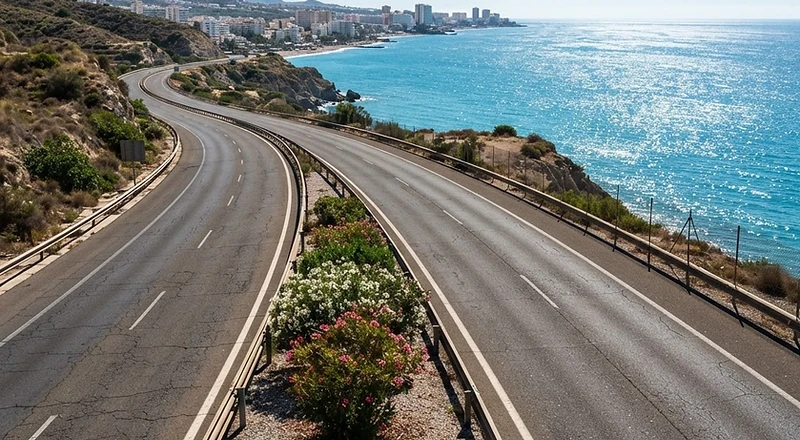
Costa Mayors Urge Fast Action on Paralyzed Motorway Traffic
Town halls unite to pressure Madrid over chronic gridlock along the vital Malaga-Torremolinos and AP-7 corridor.
Gridlock Returns With the School Run
The first week back at school brought the usual scramble for lunchboxes and uniforms — and, for thousands of drivers along the Costa del Sol, the return of tailbacks that stretch for miles before eight in the morning. Mayors from coastal municipalities across Malaga province have now banded together, issuing a joint demand to central government for urgent, binding action on the A-7 coastal motorway, the road that effectively functions as the spine of the entire coast.
The complaint is not new, but the tone has hardened. Local leaders say they are tired of promises and want dated commitments: construction schedules with start dates, not vague assurances that improvements are "under study". The worst of the congestion falls between Malaga and Torremolinos, a stretch that funnels airport traffic, school runs, freight lorries and daily commuters into the same overloaded lanes, with knock-on delays reported as far as Guadiaro further down the coast.
Why This Stretch of Road Matters So Much
The A-7 was never designed to carry the volume of traffic it now absorbs. Built in an era when the coast's population was a fraction of today's, it has become the default route for everyone from Malaga Airport shuttle vans to removal lorries serving the construction boom in Marbella and Estepona. Public transport alternatives exist, but they don't cover every gap — plenty of residents in Benalmádena or Torremolinos still find a car the only practical way to reach hospital appointments, school gates or office parks on time.
Town halls argue that patchwork repairs and temporary lane markings have run their course. What they want instead is structural: a northern bypass giving cleaner access to Malaga Airport, and genuine widening works at the pinch points where three lanes routinely collapse into one during peak hours. Mayors have also revived a longstanding request to cut or scrap tolls on the parallel AP-7 motorway, arguing that a modest toll reduction could pull enough heavy traffic off the free coastal road to make mornings bearable again for ordinary commuters.
What It Means for Residents and Businesses
For the international community that makes up a large share of the population in towns like Torremolinos and Benalmádena, this is not an abstract infrastructure debate. Reliable roads determine whether a parent makes the school run on time, whether a delivery arrives before a shop opens, or whether a hospital appointment in Malaga is worth the risk of leaving early enough. Local business associations have thrown their weight behind the mayors, warning that unpredictable journey times are starting to affect staff retention and client meetings, particularly for firms operating out of Malaga's technology park corridor.
Property owners and letting agents are watching closely too. Access and commute times are increasingly cited by buyers weighing up towns along the coast, and prolonged congestion does the region's reputation no favours at a time when it is trying to position itself as a serious base for remote workers and small businesses, not just a holiday destination.
The Wider Transport Picture
Transport planners involved in the discussions point out that road widening alone won't solve the underlying problem. Their preferred solution combines motorway relief work with the long-promised coastal railway extension, a project that has been debated for years without a firm construction timeline. Mayors are pushing for both to appear in the same national budget conversation, arguing that treating road and rail as separate issues has allowed each to be delayed in turn.
The numbers add weight to their argument. Passenger traffic through Malaga's transport hub continues to set new annual records, and none of that growth has been matched by corresponding investment in the roads and rail lines that feed it.
Next Steps
Municipal delegations now intend to table formal joint motions at their next plenary sessions, a procedural step designed to put political pressure on Madrid by showing unified local support across party lines. Whether the Ministry of Transport responds with the dated commitments mayors are demanding, or with the kind of incremental promises that have characterised previous rounds of talks, is likely to become clear once those motions are debated and the ministry is forced to respond in public. For now, residents along the Torremolinos–Malaga corridor face another school term of early alarms and long queues, with no confirmed start date yet for the works that could finally ease them.
Related news


Torremolinos Transforms Plaza de La Nogalera for Traditional Autumn Oktoberfest
Torremolinos blends Bavarian brewing customs with coastal hospitality as the annual Oktoberfest beer festival returns to the town centre this weekend.


Bikers Gather for Torremolinos Autumn Motorbike Rally and Coastal Excursions
Torremolinos prepares to host hundreds of riders from across Europe this weekend for the Concentración Mototurística, featuring mountain rides, exhibitions, and rock concerts.


Chiringuito Owners Fight Strict Coastal Demarcation Regulations
Costa del Sol beach bar proprietors launch an urgent campaign against rigid coastal concession rules threatening long-standing seafront establishments.