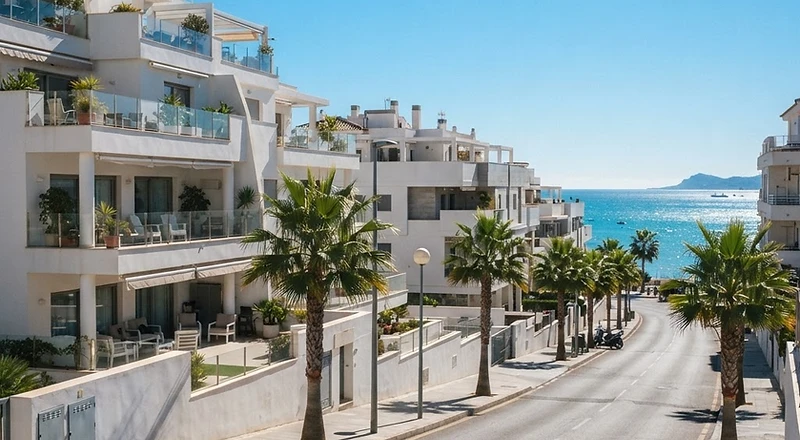
Fuengirola Starts Urban Master Plan Review Under LISTA
Fuengirola launches a 42-month urban master plan under LISTA to renew districts and increase green zones. See the full transformation plan.
Fuengirola's town hall has moved into the substantive phase of rewriting its urban planning rulebook, formally applying Andalusia's LISTA urban sustainability regulations to reshape how the municipality will grow, or rather regenerate, over the next decade. With the administrative contracts governing the review now reaching their final stage, planners at the municipal planning department have settled on a clear priority: building inward and upward within the existing town rather than pushing development outward into what little open land remains.
The move scraps the patchwork of older planning instruments in favour of two linked legal documents. The first, the Urban Management Plan (POU), will govern the regeneration and rehabilitation of streets and neighbourhoods already built up. The second, the General Municipal Management Plan (PGOM), sets out the medium- and long-term vision for public infrastructure — roads, utilities, green space and civic buildings — that the town will need as it evolves. Both documents are being drafted against a backdrop of persistently high urban land prices across the municipality, a factor that has pushed town hall planners towards prioritising sustainability, public amenity improvements and climate resilience over new construction on virgin ground.
Revitalising Built Districts and Green Corridors
Fuengirola has long been one of the most densely developed municipalities on this stretch of coast, squeezed between Mijas to the west and north and the Mediterranean to the south. Unlike many neighbouring towns that still have undeveloped hillside or inland plots to work with, Fuengirola has almost none. That scarcity of land is precisely why this planning overhaul leans so heavily on brownfield redevelopment: refurbishing tired commercial strips, modernising public squares, and knitting together pedestrian and cycle routes that link the inland residential districts to the seafront promenade.
The technical process behind all this is substantial. Officials have mapped out an eight-phase rollout expected to run for 42 months, covering strategic environmental assessments, updated cartographic surveys, and the public participation stages that Spanish planning law requires before any document of this scale can be approved. In practice, this means residents and interest groups will have several formal opportunities to comment on draft proposals before they become binding. The stated aims for the town's older central quarters are concrete enough: energy-efficient renewal of ageing residential blocks, more shaded pedestrian space to cope with summer heat, and drainage networks upgraded to handle the flash flooding that has caused problems in low-lying parts of the Costa del Sol in recent years.
What It Means for Homeowners and Buyers
For people who already own property in Fuengirola, or who are weighing up a purchase, the practical upshot of this review is largely about certainty. A clearer, modernised planning framework should, in theory, reduce the ambiguity that has sometimes dogged renovation licences and small-scale development projects in built-up Spanish towns, where overlapping or outdated rules can hold up paperwork for months. Streamlined licensing for residential renovation work, and a planning framework that actively encourages mixed-use buildings with ground-floor shops beneath residential flats, would be a tangible benefit for owners looking to renovate or for developers eyeing smaller infill sites.
Foreign buyers scanning the market for new-build and off-plan apartments elsewhere along the coast are already used to navigating shifting municipal zoning rules, and many lean on specialist agencies such as Marbella New Homes to make sense of licensing requirements and planning parameters that vary from one town hall to the next. As Fuengirola's own rules are rewritten, that kind of local expertise is likely to become more relevant, not less, particularly while the POU and PGOM remain in draft form and subject to amendment.
Next Steps
No final version of either document has been approved yet. The town hall has indicated that further technical workshops and public feedback sessions will be held in municipal administrative buildings as the draft planning documents move towards initial approval. Residents, business owners and property investors with an interest in how specific streets or neighbourhoods will be treated under the new framework would do well to keep an eye on these sessions, since the detailed zoning decisions — which streets qualify for rehabilitation funding, where new pedestrian corridors will run — are still being worked out rather than finalised. For a town with almost no spare land left to build on, how this plan balances conservation of its existing character against the pressure for renewal will shape Fuengirola's streets for years to come.
Related news


Fuengirola Opens 2026 Feria del Rosario with Major Music Lineup
Fuengirola's celebrated autumn fair gets underway today at the town's Recinto Ferial with horse parades, casetas and concerts by Marta Sánchez and David Bustamante.


Fuengirola Prepares Feria del Rosario as Costa del Sol Enters Autumn Fiestas
Fuengirola readies its historic fairgrounds and town centre for the Feria del Rosario, highlighting equestrian displays, flamenco, and regional cultural celebrations.


Costa del Sol Arts Societies Launch Ambitious Cultural Season Across Coast
Expats across Fuengirola, Nerja and Gibraltar prepare for a vibrant autumn calendar spanning art history, musical theatre and architectural wonders.