
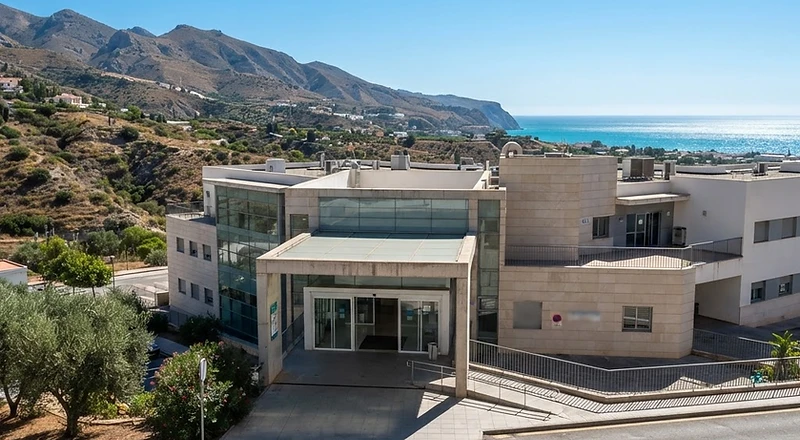
Health Scrutiny Intensifies Over Regional Axarquía Hospital
Andalusian health authorities face urgent parliamentary questions following reports of expired diagnostic reagents in the eastern district.
Questions Raised Over Testing Protocols at Vélez-Málaga Hospital
A row over laboratory oversight at the Hospital de la Axarquía has moved from local corridors into the Andalusian Parliament this week, after regional deputies confirmed they had submitted formal written questions to the regional health board concerning diagnostic supply chains and inventory controls at the Vélez-Málaga site. The hospital, which serves as the main public referral centre for the eastern Costa del Sol, handles emergency care, surgery and specialist consultations for a catchment area stretching from Rincón de la Victoria to Nerja and inland towns such as Alfarnate and Comares.
Opposition politicians used sessions in Seville to press the health board on three specific points: how laboratory protocols are audited, what internal stock-control systems are in place for diagnostic materials, and whether testing batches used across recent clinical cycles carried valid certification. None of these questions, deputies stressed, amount to an allegation that patients were harmed. Rather, they reflect concern that administrative gaps in recording and certifying supplies could undermine confidence in results even where the underlying medical care remains sound.
How the Regional Health Board Has Responded
Officials from the Andalusian health delegation have pushed back against suggestions that clinical safety was ever compromised, insisting that diagnostic validity was maintained throughout routine hospital operations. That reassurance, however, has done little to calm community groups in the Axarquía, who argue the real problem lies in how information is shared with the public rather than in the clinical outcomes themselves.
Critics point out that the Hospital de la Axarquía, opened to relieve pressure on Málaga's larger hospitals and serve a fast-growing coastal population, has long struggled with staffing levels that lag behind demand, particularly during the summer months when the resident population on the eastern coast swells with tourists and seasonal workers. Against that backdrop, any suggestion of gaps in laboratory inventory management tends to generate disproportionate anxiety, since residents already worry that the hospital is stretched thin.
Torre del Mar Rally Set for 15 October
Local civic committees and patient advocacy platforms have not waited for the parliamentary process to run its course. They have already organised a public demonstration for 15 October in Torre del Mar, one of the Axarquía's busiest coastal towns and a natural gathering point for residents from across the district. Organisers say the rally will call for binding commitments from the regional government: immediate increases in logistical and laboratory staffing at the hospital, and independent technical audits of testing and inventory procedures rather than internal reviews alone.
The demonstration is likely to draw support well beyond Torre del Mar itself. Neighbourhood associations in Vélez-Málaga, Algarrobo and Nerja have historically mobilised together on healthcare issues, given how dependent the whole eastern strip is on a single major public hospital. Whether the health board responds with concrete staffing commitments before the rally date remains to be seen.
What It Means for British and International Residents
The Axarquía is home to one of the largest concentrations of British and northern European residents on the Costa del Sol, with long-established expat communities in Nerja, Torrox and the villages around Vélez-Málaga. For many, especially retirees who rely heavily on public healthcare rather than private insurance, confidence in the local hospital system is not an abstract political issue but a daily practical concern.
Municipal leaders across the affected towns have urged the regional health board to publish a full, clear account of the laboratory audit findings as quickly as possible, arguing that transparency now will do more to restore trust than any private assurances issued through political channels. Emergency departments and outpatient clinics across the district are continuing to operate as normal, and there has been no suggestion that patients should delay seeking treatment or alter how they use hospital services.
For foreign residents unfamiliar with how the Spanish public health system, the Servicio Andaluz de Salud, handles this kind of internal scrutiny, the process now underway is a fairly standard one: parliamentary questions typically oblige the health board to respond in writing within a set timeframe, after which findings can be debated further or referred to independent bodies if concerns persist. Locals watching the story unfold will be looking for that written response, and for whether it lands before residents take to the streets in Torre del Mar next month.
Related news


Arenas Prepares Historic Axarquía Mule Fair Celebrating Rural Andalusian Heritage
The Axarquía village of Arenas gears up for its iconic Mule Fair on 12 October, honouring the traditional draught animals that shaped regional farming.

Torre del Mar Readies Promenade for Two-Day Coastal Oktoberfest Festivities
Bavarian gastronomy, live brass music, and artisanal brewing take over Torre del Mar's beachfront esplanade next weekend as the eastern coast launches autumn festivals.


Foreign Residents Urged to Register for Local Elections in Rincón de la Victoria
Rincón de la Victoria Town Hall initiates an informative drive guiding British and European expats through voter roll registration requirements.