
Marea Rosa Walk Unites Mijas and Fuengirola Against Cancer
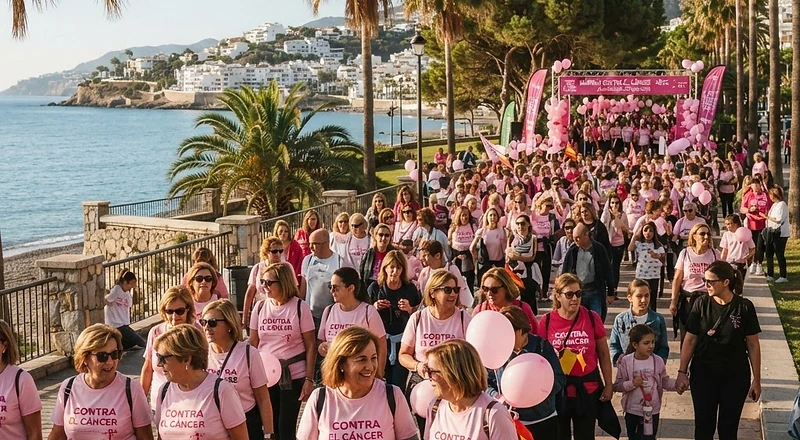
The Marea Rosa walk brought Mijas and Fuengirola together on Saturday morning for the coast's biggest breast cancer solidarity march, a non-competitive event from the Gran Parque that mixed fundraising with a firm early-detection message.
The Gran Parque in Mijas turned a decisive shade of pink on Saturday morning, and half of the western Costa del Sol seemed happy to be in on the colour. The Marea Rosa walk brought Mijas and Fuengirola together for the region's best-loved breast cancer fundraiser, a non-competitive march that started at ten o'clock and ambled, chatted and occasionally danced its way through the autumn sunshine.
The formula is deliberately simple. Anyone can join, any age, any fitness level, no stopwatch and no prizes. Participants pin on a pink shirt, pick up their route and set off behind the banners, and the point is never the distance covered. It is the crowd itself: survivors walking beside their families, neighbours who come every October, school groups, local clubs and a healthy contingent of foreign residents who have made the walk part of their calendar.
This year's timing was pointed. October is breast cancer awareness month across Spain, and towns all along the coast and inland, from Fuengirola and Benalmádena to Coín, Nerja and Torrox, are holding their own solidarity marches in the same weeks. The Mijas-Fuengirola edition has become one of the biggest, a two-town effort that reflects how intertwined the neighbours have become, with people from both municipalities organising, volunteering and walking side by side.
Behind the pink balloons, the message is a serious one, and the organisers did not let it get lost in the morning out. Early detection remains the single most effective weapon against breast cancer, and the associations that stage these walks spend the rest of the year pushing exactly that lesson: know your body, know the screening calendar in your health centre, and do not sit on a worry. Spain's public screening programme invites women from the age of 50, and many regions extend it earlier, a detail worth knowing for the coast's large international community, since screening invitations follow registration with the public health system rather than nationality.
For foreign residents, the march is also a rare and useful thing: local solidarity in its most accessible form. There is no paperwork to join a walk, no language requirement to walk a few kilometres with your neighbours, and no better introduction to the associations that support patients through treatment, from transport help to psychological support. People who turn up once tend to turn up again.
The money side is modest but real. Registration fees and the t-shirt sales fund the local work of cancer support associations, the practical help that fills the gaps around hospital appointments, and the Marea Rosa brand has built enough trust over the years that the walk now sells itself. Organisers reported strong numbers again this weekend, with the route through the park and back towards the town carrying a solid pink procession for most of the morning.
There is a quieter reason these October walks matter on the Costa del Sol. The population here is famously scattered: retirees from northern Europe, families who arrived for a season and stayed for a decade, working-age locals priced into long commutes. A town's social fabric does not weave itself, and events that get all of those groups walking in the same direction, literally, are worth more than their fundraising totals suggest.
The march is also a reminder of how the coast has changed its relationship with the disease in a single generation. Breast cancer survival rates in Spain have climbed steadily over the past two decades, driven by screening uptake and treatment advances, and the tone of these events has shifted accordingly. Saturday's walk was less a vigil and more a celebration of that progress, with the political speeches short, the music loud and the queue for the group photo stretching across the park.
What comes next is the rest of October, and the coast will see pink again before the month is out, with more towns staging their own versions in the coming weekends. For anyone who missed Saturday's edition, the standing advice from the organisers is the same one they give every year: the best time to register for the next walk is the day after this one ends, and the best time to check your screening status is today.
By mid-afternoon the park was back to its usual green, the banners folded, the balloons handed out to whichever children asked loudest. The Marea Rosa had come and gone, leaving Mijas and Fuengirola a little more connected than they were on Friday morning, which was, when you think about it, the whole point.
Related news

Mijas Cheese and Wine Festival returns for its eighth year
Mijas Cheese and Wine Festival 2026 runs 23-25 October in Plaza Virgen de la Peña, with 20 local producers, live music and a shuttle bus from La Cantera.


Mijas tourism strategy: town cluster sets vision for 2027
Mijas tourism strategy targets year-round visitors as the Mijas Lab cluster reviews strong summer figures and prepares for the Ladies European Tour golf event.

Mijas Confronts Boar Incursions as Forest Droves Move into Residential Zones
A surge in wild boar family sightings across Mijas urbanisations prompts local town hall measures to curb nocturnal scavenging.
Free Guide: Buying Property in Spain 2026
A step-by-step guide for international buyers — from NIE to the notary.
We'll send you the guide link by email too. No spam — your details stay with Marbella New Homes.