
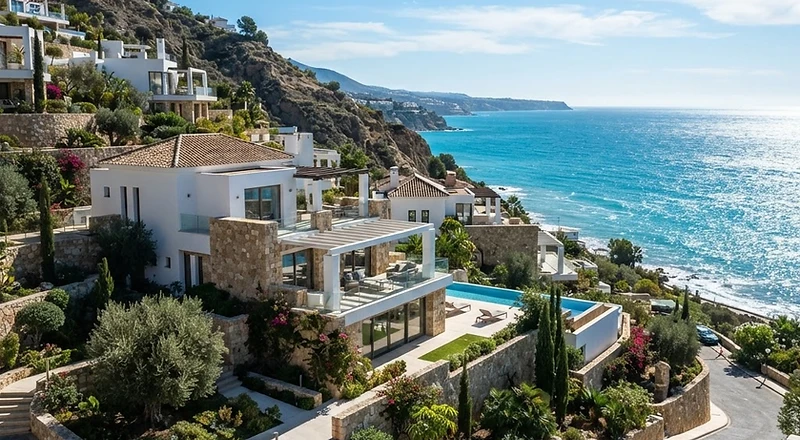
Prime Triangle Real Estate Trends: Younger Buyers in 2026
Demographic shifts and resilient global capital continue to drive high-end property transactions across Marbella, Benahavís and Estepona.
A Generational Shift in the Golden Triangle
Walk through the marina at Puerto Banús on any weekday morning and the demographic change is hard to miss. Where once retired couples strolling with newspapers under their arms defined the scene, now it is founders taking video calls on terraces, families dropping children at nearby international schools, and thirty-somethings closing property deals over coffee before a 10am meeting. Buyers in their thirties and forties now account for an unprecedented share of transactions across the prime Golden Triangle — the stretch of coastline and hillside taking in Marbella, Benahavís and Estepona long regarded as the most exclusive property corridor in southern Spain.
For decades, this corner of the Costa del Sol built its reputation on retirees seeking sunshine, golf and a slower pace of life. That customer base has not disappeared, but it has been overtaken in relative terms by a new generation of buyers: technology founders, entrepreneurs and mobile executives who increasingly treat their Marbella property not as a holiday retreat but as a working base. Local advisory data and wealth indicators point to the same conclusion — younger, internationally mobile money is now driving prime transactions in a way it simply wasn't five or ten years ago.
Prime Valuations Hold Firm Despite Wider Market Adjustments
The numbers underline how insulated this top tier of the market has become from broader turbulence. Recent analysis from regional property specialists puts prime square-metre values across the Golden Triangle at between €15,000 and €35,000 in the most sought-after gated enclaves — La Zagaleta, Sierra Blanca and the Golden Mile among them. These are addresses where privacy, security and architectural pedigree have always commanded a premium, and where supply is tightly constrained by planning restrictions and geography alike.
Across the wider province, sales growth has settled into a steadier 7% to 8% range this year — solid, if unspectacular compared with the sharper post-pandemic surges seen previously. Yet high-net-worth liquidity at the top of the market has proved remarkably resilient, even as Spain has tightened aspects of its residency and investment visa schemes nationally. Buyers with genuine capital and a long-term relocation plan appear largely undeterred by regulatory tweaks that have cooled interest elsewhere.
What has changed more visibly is the buyer mix. The traditional core of British, German and Dutch purchasers remains, but it is now being joined by growing numbers of Americans and buyers from the Gulf States, many of whom see Marbella and its surrounds as offering genuine value against the cost of comparable lifestyles in London, Zurich or New York. For these buyers, the calculation often comes down to lifestyle-per-euro: a villa in Benahavís with sea views, staff quarters and a private pool can cost a fraction of an equivalent London townhouse.
For those weighing up premium off-plan developments, consultancies such as Marbella New Homes report that certain features have shifted from desirable extras to baseline expectations. Energy-efficient construction, properly integrated home offices and round-the-clock private amenities are now standard requests from buyers who expect to spend significant working time in these properties rather than simply holidaying in them.
What It Means on the Ground for Residents and Businesses
The practical knock-on effects are already visible away from the estate agents' brochures. Younger families settling permanently in Marbella, Benahavís and Estepona are pushing up enrolment numbers at the coast's international schools, a trend that head teachers and admissions offices have been tracking closely. Demand for high-capacity broadband and digital infrastructure has risen in step, as has demand for the kind of corporate and professional services — accountancy, legal, relocation support — that a resident business community requires rather than one passing through for a fortnight's holiday.
For existing homeowners, this shift has tended to support values in the very top tier of the market even where wider provincial growth has moderated. For local authorities and service providers, it presents a different kind of planning challenge: infrastructure built around seasonal tourism and retirement living now has to accommodate a younger, work-based, year-round population. The direction of travel points towards the western Costa del Sol consolidating its position not simply as a retirement or holiday destination, but as a genuine international business base with property demand to match.
Related news

Marbella TodoDanza Festival Takes Over Historic Theatres and Plazas
Fourteen acclaimed dance troupes have arrived in Marbella as the 17th annual TodoDanza festival expands across city venues throughout October.


Carlos Alcaraz Chooses Puente Romano for Autumn Hard-Court Training
Four-time Grand Slam champion Carlos Alcaraz arrives in Marbella for a week of intensive court drills and fitness conditioning.


Inside Marbella's Branded Residences Boom: Armani, Fendi and D&G Redraw the Golden Mile
Armani, Fendi Casa, Dolce&Gabbana and Karl Lagerfeld are building within minutes of each other on the Golden Mile — inside the €4 billion branded residences boom reshaping Marbella.