
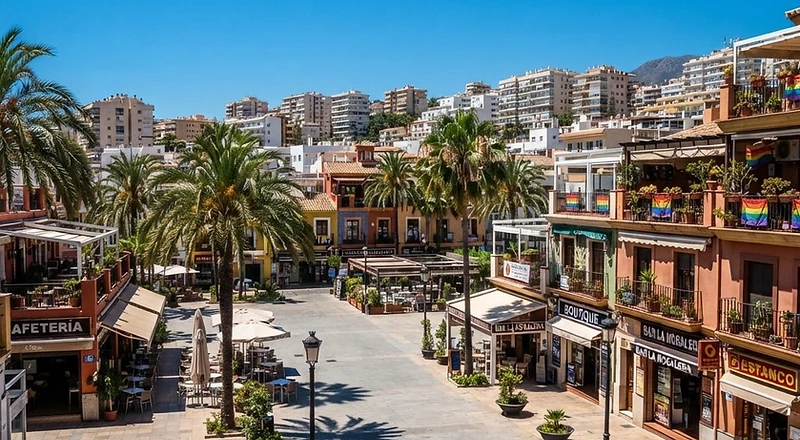
Torremolinos Leads New Andalusia LGBT Municipal Network
Torremolinos joins forces with key Andalucían cities to create an inter-municipal cooperation network advancing inclusion, social rights, and diverse tourism.
A Landmark Regional Partnership
Torremolinos has taken the lead in setting up a new municipal network aimed at coordinating equality and diversity policy across Andalucía, formalising a role the town has played informally for decades as a magnet for LGBT+ visitors and residents. The alliance was launched on Tuesday 22 September, during an international congress held in the municipality that drew delegates, campaigners and local officials from across the region.
The founding members are the Torremolinos Town Council alongside municipal representatives from Seville, Jerez de la Frontera and Almería — four cities with very different profiles, from Seville's status as regional capital to Torremolinos's identity as a coastal resort town. What unites them, organisers say, is a shared interest in pooling resources rather than each council reinventing local policy from scratch. The plan is for the network to grow steadily, drawing in other Andalucían municipalities as it establishes common working standards for social services and community policing.
That last point matters. Community policing in this context typically means training officers to handle discrimination complaints sensitively and consistently, something that has historically varied wildly between towns depending on local resources and political will. A shared standard, if it materialises as described, would give residents and visitors a more predictable experience regardless of which Andalucían town they happen to be in.
What It Means on the Ground
Torremolinos has long marketed itself as one of Spain's most LGBT+-friendly destinations, with a nightlife and hospitality scene built around that reputation stretching back to the 1980s. Formalising a regional network gives that reputation institutional backing rather than leaving it to individual bars, hotels and festival organisers to sustain on their own.
For the town's large international and expatriate population — many of whom relocated specifically because of its established reputation for tolerance — the network offers something more concrete than good intentions. Plans include shared municipal training for staff dealing with the public, improved community advisory desks where residents can raise concerns, and coordinated cultural calendars so that events in one member city don't simply duplicate what's happening in another.
For hospitality businesses along the western Costa del Sol, discrimination training extended across council boundaries could mean more consistent standards across venues, from beach bars to hotels catering to international visitors. That consistency has practical value for an area where a significant share of the economy depends on repeat visitors and word-of-mouth reputation among LGBT+ travellers specifically.
Tourism and Economic Motives Behind the Scenes
Local leaders were candid that this isn't purely a social policy exercise. Councils involved see a direct link between inclusive public spaces and sustained tourism revenue, particularly the kind of shoulder-season and off-peak visitor traffic that resort towns like Torremolinos rely on to avoid the summer-only economic cycle common along this coast.
By linking arms with Seville, Jerez and Almería, Torremolinos also positions itself to attract cultural congresses and conferences that might otherwise bypass a beach resort in favour of a larger city. Shared branding across four Andalucían destinations gives event organisers a wider menu of venues and a joint marketing pitch, rather than each town competing separately for the same limited pool of international events.
Next Steps
No firm timeline has been published for when the network's shared standards will be finalised or when additional municipalities might formally join, though the September congress was framed explicitly as a starting point rather than a finished agreement. Given the founding members span the breadth of the region — coastal resort, regional capital, sherry country and the Almería coast — the practical work now falls to municipal officials to translate congress rhetoric into actual training programmes, advisory desk staffing and coordinated event calendars.
For residents and second-home owners along the Costa del Sol watching how their town councils spend public money on social policy, the real test will come in whether these commitments show up in visible changes: staff training rolled out at town halls, advisory services actually staffed and used, and cultural events that feel coordinated rather than coincidental. Those following property and lifestyle trends in the area can find further context on the region's development through Marbella New Homes.
Related news

Torremolinos Transforms Plaza de La Nogalera for Traditional Autumn Oktoberfest
Torremolinos blends Bavarian brewing customs with coastal hospitality as the annual Oktoberfest beer festival returns to the town centre this weekend.


Bikers Gather for Torremolinos Autumn Motorbike Rally and Coastal Excursions
Torremolinos prepares to host hundreds of riders from across Europe this weekend for the Concentración Mototurística, featuring mountain rides, exhibitions, and rock concerts.


Chiringuito Owners Fight Strict Coastal Demarcation Regulations
Costa del Sol beach bar proprietors launch an urgent campaign against rigid coastal concession rules threatening long-standing seafront establishments.