Maro Choto Mareno Day Returns to Nerja This Weekend
Maro Choto Mareno Day returns on Saturday 21 November: slow-cooked kid goat stew in the Nerja village square, with part of the proceeds going to the Taller de la Amistad.
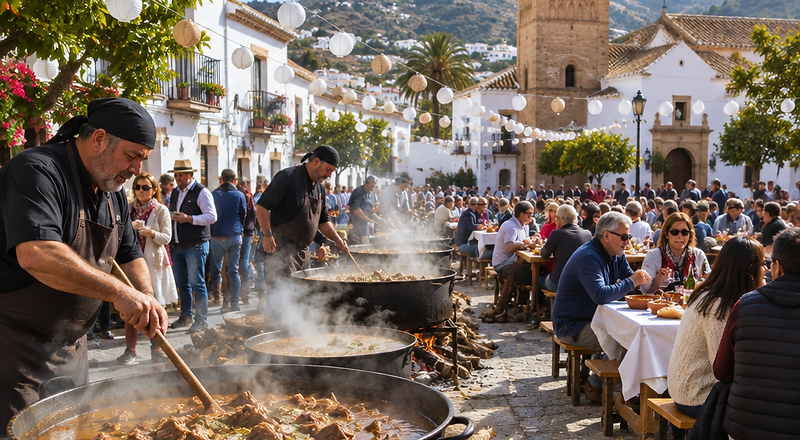
Maro puts its pots back on the fire this Saturday, 21 November. The village east of Nerja is holding the second edition of the Maro Choto Mareno Day, a date devoted to the slow-cooked kid goat stew that carries the village's name, and once again part of the money raised will go to the Taller de la Amistad, the social workshop that gives people with intellectual disabilities in the area a place to learn, work and belong.
If you have ever driven through Maro on the coast road, you will know the feeling of the place. A single square, a church tower, and then the land falling away towards the sea where the greenhouses of the tropical plain begin. It is a village of a few hundred souls that most visitors pass on their way to the Nerja caves, and that is exactly why its food day matters. A festival that can stop a car for an hour in mid-November is a festival doing its job.
The choto mareno is the dish in the spotlight. Kid goat, sourced from the herds of the sierras behind the coast, is marinated and then cooked slowly until the meat comes away from the bone in soft, fragrant strands. It is the kind of cooking the Axarquia has always done best: humble raw material, patience, and a sauce worth mopping up with bread. On Saturday the pots will sit at the centre of village life, and portions will be served the way this food tastes best, outdoors, at long tables, with the November sun doing its best impression of October.
Last year's first edition set the tone, and the organisers have kept the shape that worked. Food is the heart of it, but the day is built as a village festival rather than a restaurant service: stalls, music, children running between the tables, and the local associations that hold Maro together on every other weekend of the year. The programme is being published through the Nerja town hall channels as the date approaches, and last year's timings ran through the late morning and the midday meal, which is when a stew like this should be eaten anyway.
The solidarity side is the part that makes the day more than a good lunch. The Taller de la Amistad runs in Nerja as a workshop and meeting point for people with intellectual disabilities, offering training, company and a route into work that does not always exist in small towns. Part of Saturday's takings goes to the workshop, so every plate of choto eaten in Maro buys a little more of what the workshop does. It is the kind of circle a village can close on its own, and closing it over a shared pot is a very Spanish way of doing charity.
For Nerja itself, the weekend is a good excuse to be out early. Maro sits a few minutes' drive east of the Balcon de Europa, so the sensible plan for visitors is the one the locals will follow: the coast road in the morning, the square in Maro for the midday meal, and then the walk down to the coves below the village, or the caves inland, when the plates have been cleared. In late November the beaches are empty, the light is soft, and the water is still holding the warmth of the autumn.
For the coast's international residents, days like this are the short cut into local life. Nothing in a food festival requires perfect Spanish. You queue, you point, you receive a plate of something someone's grandmother has been cooking since dawn, and you say gracias. The rest of the conversation happens with your hands and your appetite, which is the language Maro has always spoken best.
What the second edition shows is that the idea has legs. A first year proves a village can cook for a crowd. A second year proves the crowd will come back, and that the organisers can build something repeatable around one pot and one good cause. For a district that lives mostly from agriculture and from the visitors heading to its famous cave, a food day with a name of its own is a small but real piece of economic identity.
So if you are anywhere between Nerja and La Axarquia this weekend, follow the smell of garlic and cumin up the hill to Maro. Bring bread, bring an appetite, and arrive before the pots empty. The choto mareno only gets its day once a year, and this year it falls on Saturday.
Related news

Nerja British Tourism Rises Nearly 30% in 2026
Nerja records 44,000 British hotel guests from January to early November, a rise of nearly 30% and the fastest growth in Malaga province.


Cueva de Nerja joins Science Week with three free events
The Cueva de Nerja has organised three free activities for Science Week 2026, opening the cave's scientific, climatic and archaeological side to visitors.


Nerja Autumn Feria Opens as Traditional Festivities Light Up Eastern Coast
Nerja marks its patron festival this week with horse parades, bustling casetas, and live musical entertainment across the town centre.
Free Guide: Buying Property in Spain 2026
A step-by-step guide for international buyers — from NIE to the notary.
We'll send you the guide link by email too. No spam — your details stay with Marbella New Homes.